
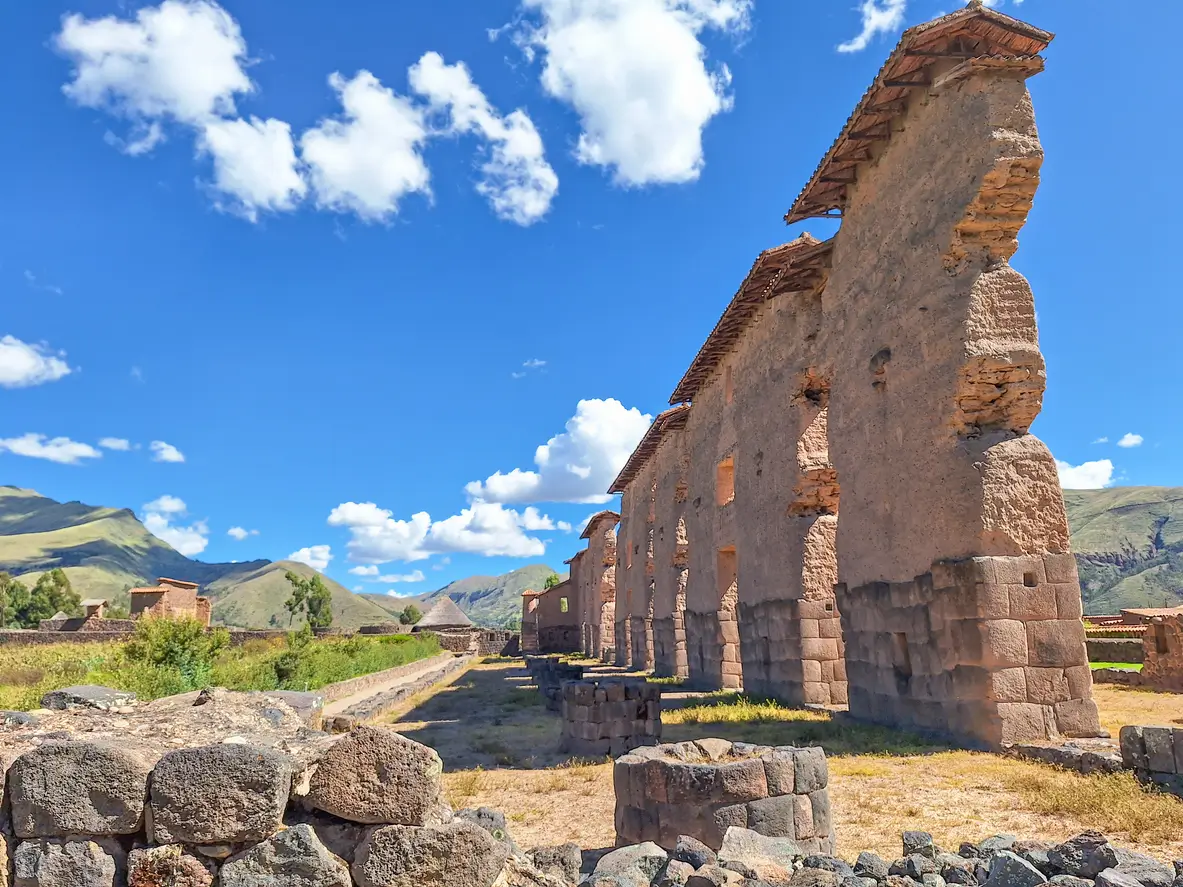
Raqchi Archaeological Site in Cusco: Home to the Temple of Wiracocha and a Forgotten Inca Spiritual Center
If you’ve only explored Machu Picchu or the bustling streets of Cusco, you might be missing out on a key part of Inca history. The Raqchi Archaeological Site in Cusco is one of those hidden gems that often doesn’t get the spotlight it deserves. This place is home to the Temple of Wiracocha, one of the most unique and impressive Inca structures you’ll find. Unlike other ruins scattered across Peru, Raqchi provides a different perspective on Inca architecture and their profound spiritual beliefs.
Dedicated to Wiracocha, the creator god, the temple showcases the deep significance he held in Inca religion and daily life. Raqchi served as an important administrative, religious, and military hub, where ceremonies and rituals were held. It was more than just a place to live—it was a spot where the Incas came to connect with their gods and seek guidance. As you wander through the site, you’ll notice the meticulous stonework and thoughtful design that reflect the Incas’ devotion to their faith.
For travelers wanting to go beyond the usual stops, Raqchi is a fantastic choice. It offers a chance to explore Inca history in a quieter, less crowded setting. Visiting here means more time to take in the incredible architecture and imagine life in a strategic and sacred Inca complex. Whether you’re an archaeology fan or simply curious about Inca culture, Raqchi gives you a fresh and meaningful experience during your trip to Cusco. Truly, this underrated gem deserves its place on every Peru travel itinerary.
What will you find here?
- What Exactly Is Raqchi in Cusco? A Closer Look at This Unique Inca Site
- The Meaning Behind Raqchi: Culture, Religion, and Power
- Raqchi’s Hidden Wonder: The Majestic Temple of Wiracocha
- Key Attractions Beyond the Temple of Wiracocha: Other Highlights of Raqchi
- Spiritual Life at Raqchi: What Made It Holy to the Incas
- What to Expect When Visiting Raqchi Cusco
- What Every Visitor Should Know Before Visiting Raqchi
- Frequently Asked Questions
- Final Thoughts
What Exactly Is Raqchi in Cusco? A Closer Look at This Unique Inca Site
If you’ve seen the crowds at Machu Picchu or walked the busy streets of Cusco, it’s easy to think you’ve seen it all when it comes to the Inca world. But that’s not quite the full picture. Just a few hours from Cusco is a site that tells another side of the story—one that’s often missed by most travelers. That place is Raqchi, a lesser-known archaeological site that once played a major role in Inca religious, administrative, and military life. It’s quiet, it’s unusual, and it’s full of purpose.
Let’s break it down and take a closer look at what makes Raqchi so special:
A Quick Overview of Raqchi
So, what makes Raqchi stand out? It’s an extensive archaeological complex located about 110 km southeast of Cusco. Conveniently positioned along the main road connecting Cusco to Puno, it’s surprisingly accessible yet somehow still off the beaten path.
The highlight? The Temple of Wiracocha. This impressive structure grabs attention with its sheer height and distinct construction style, featuring stone at the base topped with adobe. Around this monumental temple, you’ll find rows of storehouses, or qolqas, ancient living spaces, fountains, and a protective wall. The site also includes ceremonial baths and military barracks, suggesting its role went far beyond religion. It’s like stepping into an old city rather than just visiting a single ruin.
Built in a Powerful Time
Raqchi was built in the 15th century, during the rule of Pachacuti, the same Inca emperor who ordered the construction of Machu Picchu. This was a flourishing period for the Inca Empire. Constructing sacred sites was a strategy to solidify power and share beliefs.
Dedicated to Wiracocha—one of the principal gods in Inca mythology and considered the universe’s creator—the temple boasts a design that’s truly unique. It’s the only known Inca temple that used such tall walls and columns to support a massive roof. That alone makes Raqchi stand out in the world of Inca ruins.
Why Most People Miss It
Despite not being hidden, Raqchi remains overlooked. Unlike the world-famous Machu Picchu, which is often swamped with tourists, Raqchi seems nearly forgotten. One reason? Maybe its lack of dramatic mountain scenery or a big-name reputation. Most travelers pass by on their way to Puno or Lake Titicaca without stopping.
Another reason is that Raqchi doesn’t appear in most tour packages. But for those who do make the stop, Raqchi offers a peaceful, uncrowded experience and a spiritual vibe. It’s a place where you can slow down, wander around, and really connect with the site’s energy—without fuss or long queues.
So, what is Raqchi at its core? It’s not just a pile of ruins. It provides a window into the spiritual and everyday life of the Incas. It reveals how the Incas seamlessly wove together their faith, farming practices, and urban planning into one cohesive whole. If you’re keen to explore the Inca world beyond famous postcard images, Raqchi invites you to dive deeper into an authentic piece of history.
The Meaning Behind Raqchi: Culture, Religion, and Power
Raqchi, an ancient archaeological site in Peru, provides a fascinating window into the Inca Empire’s past and offers a deeper understanding of its culture, religion, and power. This remarkable site has long intrigued historians and travelers alike. Why was it so important? Let’s dive into its significance within the Inca Empire.
Role of Raqchi in the Inca Empire
Raqchi wasn’t just another stop along the road. It played a crucial role in the Inca Empire, serving as a center for various activities crucial to their society. The site functioned as a storage area, where numerous houses stored supplies. This operation was essential for supporting Inca troops and providing for local communities. Additionally, Raqchi housed a temple dedicated to Wiracocha, the creator god, amplifying its religious significance. Overall, the site stood as a testament to the Inca’s organizational prowess and cultural richness.
Strategic Location Along the Qhapaq Ñan (Inca Road Network)
Now, you might wonder how location plays into this. Well, Raqchi’s strategic position along the Qhapaq Ñan, the vast Inca road network, only heightens its importance. This road network linked key points across the empire, enabling efficient communication and trade. Raqchi stood as a waystation (tampu), ensuring goods, people, and information moved smoothly across territories. By facilitating these exchanges, Raqchi reinforced the empire’s connectivity, bolstering its control over a sprawling region.
Religious, Military, and Administrative Importance
Let’s not forget how Raqchi served multiple purposes. Besides being a waystation, it was a religious and logistical hub. The Temple of Wiracocha was a spiritual center that attracted pilgrims and devotees. The site’s layout also suggests it housed troops or laborers rather than permanent military fortifications. Administratively, Raqchi acted as a local center for governing surrounding areas. It had a hand in everything from distributing resources to collecting tributes, underlining the site’s multifaceted role in maintaining the empire’s power.
Connection to the Deity Wiracocha, the Inca Creator God
Lastly, let’s touch on something divine. Raqchi’s connection to Wiracocha, the Inca creator god, adds another layer to its historical significance. The imposing temple dedicated to this deity is one of the site’s standout features. It symbolized a connection between the material world and the divine, reflecting the Inca understanding of balance. The reverence for Wiracocha within Raqchi underscores the blending of politics and religion, illustrating how the two were intricately woven together in Inca society.
In conclusion, Raqchi was more than just an archaeological site. It was a linchpin in the Inca Empire, illustrating the complexities of their society. From its strategic location to its religious importance, Raqchi was a center of culture, power, and spirituality. The site continues to be a source of wonder, revealing new insights into the fascinating world of the Incas.
Raqchi’s Hidden Wonder: The Majestic Temple of Wiracocha
The Majestic Temple of Wiracocha is a fascinating site that offers a glimpse into the creativity and engineering prowess of the Inca civilization. Standing tall, the temple’s central wall is a colossal 12 meters high. It’s an impressive sight. On either side of this wall, massive columns reach up, giving the structure an awe-inspiring symmetry and balance.
One distinctive feature of the Temple of Wiracocha is its use of both stone and adobe. This combination is relatively rare in Inca architecture. Typically, the Incas preferred stone due to its durability and cultural significance. However, here, adobe is interwoven with stone, adding a unique touch to the temple’s robust design. The lower sections are finely cut volcanic stone, while the upper portions are made of adobe, which would have supported a massive gabled roof. This mix sparks curiosity. Why choose such an unusual blend? Was it a purposeful choice to symbolize something greater or simply a practical decision?
Theories about the temple’s actual function abound. Some scholars propose that it served as a temple, a place of worship dedicated to Wiracocha, the creator god. Yet, others speculate it might have also functioned as a tampu (waystation) or perhaps a ritual storage and gathering space for pilgrims. Each theory brings its own set of questions. Could it have been all three? This multifunctionality would not be surprising, given the Inca’s ingenuity.
Beyond its physical structure, the Temple of Wiracocha holds deep spiritual symbolism. It is believed to have been a place for important ceremonies and rituals. This spiritual aspect is critical. It highlights the temple’s role not just as a physical structure, but as a significant part of Inca culture and religion. The ceremonies would have been deeply tied to their beliefs and understanding of the world.
In summary, the Temple of Wiracocha is more than just an architectural wonder. Its massive size and unique design offer insights into the Inca’s world. The blend of stone and adobe, the towering central wall, and the columns are remarkable. Equally intriguing are the theories about its purpose and the spiritual life it embraced.
The blend of architectural ingenuity and religious importance makes the Temple of Wiracocha at Raqchi perfect for those who are interested in ancient civilizations and their enduring legacy.
Key Attractions Beyond the Temple of Wiracocha: Other Highlights of Raqchi
While the Temple of Wiracocha is undoubtedly the centerpiece of Raqchi, this remarkable Inca archaeological site offers much more to explore. Beyond the towering walls of the temple, visitors will find an impressive array of structures. Each element tells a story of how the Incas lived, worshipped, and governed. These hidden corners of Raqchi offer deeper insight into the spiritual and practical genius of Inca architecture and planning.
Colcas (Qollqas)
The colcas are some of the most impressive sights in Raqchi. These circular and rectangular storage buildings once held large quantities of maize, quinoa, dried potatoes (chuño), and other essentials. With around 200 still standing, their size and number hint at how important Raqchi was for food supply and resource distribution. The sight of these colcas, still standing strong, offers a glimpse into the life of the past.
These storehouses weren’t randomly placed. The Incas positioned them near key roads and population centers, making Raqchi a strategic spot in the Inca road system. The climate played a part too—it helped preserve food, and the layout made it easy to access and transport when needed. It’s fascinating to see how everything was so well thought out.
Seeing the colcas up close shows the organizational power of the Inca Empire. They weren’t just concerned with temples and rituals—they managed their empire through systems like these. The colcas prove that planning and practicality were central to Inca life. Such details really bring history to life.
Water Fountains & Ritual Channels
As you explore Raqchi further, you’ll come upon the water fountains and ritual channels. The Incas were masters of water management, and these features exemplify their expertise. These channels were not only used for irrigation but also played a significant role in their religious practices. Water held a sacred place in Inca culture.
Additionally, the fountains are thought to have provided fresh water to the inhabitants and possibly served ceremonial purposes as well. Their intricate construction speaks volumes about the engineering prowess of the Incas. Watching how the water flows can tell you a tale of resourcefulness and spiritual connection.
In a broader context, these water features demonstrate how the Incas integrated functionality with spirituality. As you wander by, it’s easy to appreciate how everyday life and religious beliefs seamlessly intertwined in this remarkable civilization. It’s an ordinary scene that tells an extraordinary story.
Large Central Plaza
A short walk around Raqchi will bring you to what was once a bustling hub—the large central plaza. This wide-open space is where people would gather for social and ceremonial occasions. It served as the heart of Raqchi, a place for important community interactions.
The size of this plaza indicates the scale of Raqchi and its importance as a regional center. Imagine the buzz of activities that once filled this area—markets, festivals, and rituals. The open expanse also provides impressive views of the surrounding structures and landscape.
Moreover, the central plaza’s role in connecting the numerous buildings suggests a sophisticated urban plan. While the hustle and bustle may be gone, standing in its midst, you can almost hear the echo of ancient footsteps and voices, painting a vivid picture of Inca life.
Inca Baths
Not far from the plaza, the Inca baths stand as a symbol of the Incas’ dedication to ritual purification and spiritual practice. These baths were likely utilized for both hygienic and ceremonial reasons, associating cleanliness with spiritual purity.
Small pools and channels create an intricate layout, hinting at the complex system devised for water management and distribution. The Incas viewed water as both a life-giving force and a spiritual component, reflecting their deep connection with nature.
These baths are a testament to the fact that life in Raqchi was not all about work. The people had time to observe rituals and maintain spiritual well-being, just like us today. They offer a unique glimpse into the cultural practices of a bygone era, blending the mundane and the mystical seamlessly.
Ceremonial Enclosures
Venture a bit further, and you’ll encounter the ceremonial enclosures. These spaces were likely dedicated to religious rites and community gatherings, highlighting the spiritual life of Raqchi. The precise construction of these enclosures suggests their importance to the Incas.
These structures are unique, with a blend of stonework and space indicating a place for reverence and community decisions. They weren’t just physical spaces but hubs of cultural expression and spiritual vitality. It’s interesting to think about the discussions and rituals that must have taken place here.
These enclosures also reflect the architectural prowess of the Incas. Not only were they built to last, but they were also artistically significant, embodying the beliefs and customs of their creators. Standing within them, you feel a palpable connection to the past, experiencing the sacred and the personal.
Perimeter Wall
Then there’s the perimeter wall, a formidable structure that encircled the key areas of Raqchi. This wall served multiple purposes: not just for defense but as a boundary separating sacred spaces from common or administrative zones. Its sheer length and height suggest the importance of delineating sacred geography.
Built with precision, the wall speaks to the Inca’s emphasis on protection and order. It delineated the boundaries of their world, both physically and symbolically, highlighting the community’s significance. Walking along its remnants, you sense both power and peace.
Moreover, the perimeter wall exemplifies the synthesis of utility and symbolism. It was not just a defensive measure but also a statement of identity and pride. The experience of viewing it up close connects you with the ancient inhabitants’ sense of place and purpose.
Kallankas (Great Halls)
Close by, the kallankas make an imposing sight. These great halls were probably used for gatherings, administrative work, and possibly even for sheltering travelers. Their size and design attest to their multifunctional role within Raqchi, serving as a nexus for civic and social life.
Constructed with a blend of stone and adobe, the kallankas are still impressive today. Their enduring presence signifies the robust architectural techniques utilized by the Incas. They are a testament to the sophistication and foresight inherent in Inca urban planning.
Moreover, kallankas are fascinating because they mirror Inca society’s adaptability. They reveal how structures were designed not just for formality but to adapt to multiple needs. These halls are a wonderful reminder of the practical and communal spirit of the Incas.
Residential & Administrative Areas
Lastly, the residential and administrative areas provide a glimpse into daily life in Raqchi. These zones were likely populated by families and officials responsible for managing the region’s logistics and spiritual practices. It’s intriguing to think of how everyday routines mingled with civil duties here.
Houses and offices were constructed with a mix of stone and clay, indicating that functionality was as crucial as comfort. The placement and design of buildings reflect a thoughtful approach to living and working, highlighting the importance placed on community and organization.
These areas remind us that the Inca people were deeply connected to both spiritual and civic life. The blend of personal spaces and administrative areas shows how they balanced community and empire-building. It’s these relatable details that truly bring the ancient city of Raqchi to life.
Together, these key attractions beyond the Temple of Wiracocha offer a deeper look into the daily life and sacred purpose of Raqchi. Every structure had meaning. Every pathway is connected to something greater. Exploring them gives us a richer understanding of how advanced—and how intentional—the Inca civilization truly was.
Spiritual Life at Raqchi: What Made It Holy to the Incas
Raqchi was a spiritual center, deeply tied to the beliefs and traditions of the Inca people. The site tells the story of a sacred system influencing life, nature, and the gods.
At the heart of this connection is Wiracocha, a major deity in Inca mythology. He was known as the creator god, responsible for the existence of the world, the sun, the moon, and all living things. The grand temple dedicated to Wiracocha at Raqchi is more than just impressive with its towering walls. It shows the might of Wiracocha, serving as a tribute to one of the highest spiritual authorities of the Inca civilization.
But here’s the thing, the temple’s massive scale suggests Raqchi wasn’t just for the locals. This site likely attracted visitors from distant places as a major pilgrimage destination. Imagine the buzz during ceremonies in the large plaza—perfect for gathering hundreds of worshippers. It was lively, hosting offerings, rituals, and possibly seasonal festivals, emphasizing its role as a vibrant center of spiritual life.
Archaeological finds at Raqchi highlight ceremonial elements clearly visible throughout the site. The layout, water channels used for ritual cleansing, and specially designed enclosed spaces were thoughtfully planned. Everything flowed with purpose—from the entrance guiding visitors to spots for prayer and gift offerings.
Raqchi’s sacredness also lies in its link to Inca cosmology. The Incas cherished harmony among nature, the sun, the moon, and sacred mountains, or ‘apus.’ These natural wonders were considered alive. The placement of Raqchi—along with its alignment to nearby mountains and its ritual water features—suggests it was chosen for its sacred geography, blending the natural and spiritual realms.
Every part of Raqchi reflected the spiritual life of the Incas. It wasn’t just about worship. It was about balance. Between the sky and the earth. Between the people and the gods. That’s what made Raqchi holy. And that’s why it still holds spiritual significance today.
What to Expect When Visiting Raqchi Cusco
Raqchi is one of those places in Cusco that quietly surprises you. It’s not as famous as Machu Picchu, but it has its own kind of magic. If you’re planning a visit, it helps to know what to expect before you get there. From how to get to Raqchi to what the terrain is like, having the basics down makes your trip smoother. So, here are some things to expect when visiting Raqchi Cusco:
Location and How to Get There
Raqchi is located in the southern part of the Cusco region, about 120 kilometers from the city of Cusco. It is part of the San Pedro district in Canchis province, sitting along the main Cusco–Juliaca–Puno route, which is part of the Interoceanic Highway and is commonly used by long-distance buses. This makes it a handy spot to visit if you’re heading towards Puno or checking out southern Peru.
There are a few ways to get there. Many visitors choose a guided tour that hits various historical spots between Cusco and Puno, including Raqchi. For those going solo, take a local bus or a shared van, known locally as a “colectivo,” from Cusco to Sicuani. From there, a quick taxi ride will bring you to Raqchi. The entire journey usually takes around three hours each way. It’s not tricky, but a bit of planning helps.
Public transport is budget-friendly but can be slower. Tours tend to be quicker and more efficient, though pricier. No matter your choice, Raqchi promises a peaceful and genuine experience.
Entrance Fee and Opening Hours
Entry to Raqchi is affordable. The entrance fee is typically S/. 10 soles (about $2.50 USD), though prices may vary slightly if you’re part of a tour group or if local rates change. Some tours already include the fee, so it’s good to check with your guide in advance.
Raqchi is open every day of the week. Most travelers arrive between 8:00 AM and 4:00 PM, perfect for capturing photos in good light and avoiding big crowds. Raqchi doesn’t open after dark, and you won’t find any artificial lighting inside.
Terrain and Accessibility
Raqchi is set at an elevation of roughly 3,450 meters (11,300 feet) above sea level. The air feels thinner here, and the sun shines brightly. If you’ve just landed in Cusco, it’s wise to spend at least a day getting used to the altitude before venturing out to Raqchi. It’ll make your visit much more comfortable.
Walking around Raqchi is fairly easy. The paths are mostly flat or gently sloping dirt trails. Some uneven or rocky sections pop up near the ruins, but you won’t need heavy-duty hiking boots. A solid pair of walking shoes will suit you fine. Just expect a little dust. The terrain isn’t extreme, but keep in mind it’s also not modernized.
Facilities
Remember, Raqchi is a historic site, not a big tourist hub. That’s why facilities are basic but don’t worry because they are sufficient. Near the entrance, you’ll find restrooms maintained by local staff. They’re straightforward, but generally clean enough for a quick stop. Packing some toilet paper is a good idea.
Outside the site, discover a small market with local vendors offering handmade souvenirs, snacks, and drinks—a perfect way to support the local community. They sell bottled water, too, which is essential at this altitude.
What Every Visitor Should Know Before Visiting Raqchi
From its spiritual significance to its peaceful surroundings, Raqchi offers a different kind of experience—one that feels more personal and less rushed. But like any place with altitude, ruins, and local customs, it helps to know a few things before you go. Here are some practical tips and must-knows that can make your visit smoother, easier, and more meaningful:
Best Time to Visit
The best time to visit Raqchi is during the dry season, which typically runs from May to October. These months bring clear skies, mild weather, and the best conditions for walking around the ruins. It’s cooler in the mornings and evenings, but the sunshine during the day makes it perfect for exploring and taking photos.
The rainy season lasts from November to April, and during that time, the site can get muddy and slippery. It’s still open, but not as easy to enjoy. If you go in the rainy months, pack a light rain jacket and good shoes. May and October are shoulder months—less rain, fewer crowds, and still a good time to go.
What to Pack
Here’s a simple list to help you pack smartly for your trip. Raqchi is a bit of history mixed with a lovely landscape, so let’s make sure you enjoy every bit of it.
- Comfortable Walking Shoes: You’ll likely do a bit of walking around the ruins. Comfy shoes make a huge difference.
- Light Layers: The weather can change, so it’s good to be ready. A light jacket or sweater helps a lot.
- Sunscreen: The sun can be strong. Protect your skin even on cloudy days.
- Hat and Sunglasses: Keep the sun out of your eyes and stay cool.
- Reusable Water Bottle: Stay hydrated, especially if you’re walking around. Bringing your own bottle is handy.
- Snacks: A granola bar or some fruit is always nice to have on hand.
- Camera or Smartphone: You’ll want to capture some memories. So make sure it’s charged.
- Small Backpack: Just something to carry all your essentials without being weighed down.
- Cash: Some places only take cash, and it’s good for small purchases or tips.
- Guidebook or Notes: A little info on Raqchi can help make your visit more interesting.
Cultural Etiquette
Visiting Raqchi, with its rich history and beautiful landscapes, is an amazing experience. To make the most of your visit and show respect to the local culture, here are some helpful tips:
- Dress Respectfully: Wear modest clothing. Covering your shoulders and knees is a good rule of thumb.
- Greet Warmly: A simple “Buenos días” or “Buenas tardes” goes a long way. A smile is universal.
- Ask Before Taking Photos: Not everyone is comfortable with having their picture taken. Always ask first, especially with locals and their property.
- Mind Sacred Spaces: Some areas are more than just tourist spots. Treat them with care and respect.
- Learn a Few Local Words: Even just a few basic words in Quechua or Spanish can show your respect for the culture.
- Support Local Artisans: Buy souvenirs and crafts directly from local makers when possible. It helps their community thrive.
- Be Polite with Food: If you’re offered a drink or meal, it’s kind to accept. It’s part of the hospitality.
- Be Mindful of Your Litter: Keep the environment clean by disposing of waste properly or packing it out with you.
- Listen and Observe: Sometimes just watching how locals do things can teach you a lot. It’s a great way to learn and avoid mistakes.
Photography Tips
Raqchi is a fascinating place in Peru filled with history and stunning views. If you’re planning to visit and want to take some great photos, here are a few tips to keep in mind:
- Get there early: The light is softer in the morning and you’ll have fewer crowds to deal with. This means you can capture those beautiful ruins without a bunch of people in the background.
- Work with natural light: Pay attention to the direction of the light. Early morning or late afternoon sunlight can give warm and dramatic tones to your photos.
- Focus on details: While wide shots of the ruins are a must, don’t forget to zoom in on the details, like stone carvings or textures. It adds variety to your shots.
- Use the surrounding landscape: Raqchi is surrounded by hills and picturesque scenery. These can be perfect backdrops for your photos.
- Capture the scale: To show how big the structures are, include a person in the frame. It gives a sense of scale and makes the ruins stand out.
- Consider the weather: Sometimes, moody clouds or the golden light during sunset can add a special touch to your pictures. Weather can change quickly, so keep an eye out.
- Shoot from different angles: Don’t just shoot from eye level. Get low to the ground or find a higher vantage point to create more interesting compositions.
Respect the site: Be mindful of your surroundings and any rules about where you can and cannot go. Keep the area clean and untouched.
Frequently Asked Questions
Visiting Raqchi for the first time usually comes with a few questions. It’s not the most famous site in Peru, so detailed info can be hard to find. That’s why it helps to clear up a few things before you go.
Here are some of the most common questions travelers ask about visiting Raqchi, with quick answers to help you plan your visit.
Do I need to acclimate before going to Raqchi?
Yes, spending a day or two in Cusco or nearby to adjust to the altitude is advisable. Raqchi sits at around 3,450 meters above sea level, which means thinner air. If you’re not accustomed to high altitudes, you might experience fatigue or shortness of breath. Staying hydrated, pacing yourself, and resting can significantly help.
Is Raqchi suitable for solo travelers?
Raqchi is a safe and serene destination, ideal for solo travelers who are fond of history and self-guided exploration. The site tends to be uncrowded, allowing for a peaceful visit. Ensure you arrange your transportation and carry cash. A basic understanding of Spanish can also facilitate interactions with locals for directions.
Is Raqchi Cusco very cold?
Temperatures in Raqchi can be cool, particularly in the mornings and evenings, especially during the dry season. Daytime temperatures are generally mild. Dressing in layers will help you adapt to changing weather conditions, and remember the altitude makes the sun feel more intense.
How much time should I spend at Raqchi?
Most visitors spend approximately 1 to 1.5 hours exploring Raqchi. This time typically allows you to visit the Temple of Wiracocha, wander through the storage houses, and observe the water channels. If you have a keen interest in history or photography, consider allocating a bit more time. While not expansive, the site offers much to explore and appreciate.
Are ceremonies still held at Raqchi today?
Yes, local communities occasionally conduct traditional Andean ceremonies at Raqchi, particularly during special festivals or spiritual dates. These events are often private or community-centered. While casual visitors might not witness a ceremony, the site retains significant spiritual importance and continues to play a role in cultural traditions.
Are there other temples in Raqchi besides the Temple of Wiracocha?
While the Temple of Wiracocha is the main highlight, Raqchi is home to other sacred spaces, such as ceremonial enclosures and ritual fountains. Although these areas may not resemble conventional temples, they served religious or spiritual functions, often hosting offerings and significant gatherings. The layout reflects how spiritual activities extended beyond a single structure.
What makes Raqchi different from other Inca sites?
Raqchi is distinct in its dedication to Wiracocha, the creator god in Inca mythology. It boasts one of the tallest surviving Inca structures and around 200 colcas (storehouses), making it a rarity. The site uniquely combines spiritual and administrative functions, making it both sacred and practical.
Can I visit Raqchi without a guide?
Yes, Raqchi is accessible to independent travelers and the layout is straightforward. While some informational signs are available, a guide can provide deeper insights. If you prefer a solitary and leisurely exploration, visiting without a guide is perfectly suitable.
Are there any restrictions inside the site?
To preserve the site, visitors are asked not to climb on the ruins or touch specific structures. Drones are generally prohibited without special permission. Staying on marked paths is recommended, and signs throughout the complex outline the basic rules for visitors.
Can I visit Raqchi on a day trip?
Yes, visiting Raqchi on a day trip from Cusco or Sicuani is common. The drive from Cusco takes about 3 hours one way, so it’s a long but manageable day. Many travelers also stop at Raqchi on the way to or from Puno. It fits well into a broader travel route through southern Peru.
Final Thoughts
It’s clear that Raqchi is worth visiting, especially if you’re looking to see a different side of the greater Cusco region. It’s not polished or packed with crowds, and that’s exactly the point. This is where you go when you want something slower, quieter, and more rooted in the spiritual heart of the Inca world. There’s power in its simplicity.
There’s also meaning in every corner—whether you’re standing in front of the Temple of Wiracocha or walking past the old colcas and ritual fountains. Raqchi speaks without trying too hard. You feel the connection to the land, to tradition, and to a time when this place meant something much more than stone walls and structure.
So if your trip is about more than just checking off famous stops, Raqchi is a smart addition. It gives depth to your route and helps you understand a bigger piece of the story. And while it might not come with the buzz of larger sites, it makes up for that with heart.
And the best part? You don’t have to choose between famous and forgotten. With the right route, it’s easy to visit Cusco, Ollantaytambo, and even Machu Picchu after Raqchi in one trip. That’s where Inca Rail comes in—offering scenic, comfortable train journeys through the Sacred Valley that connect you to Peru’s most iconic destinations.
Start planning your journey—and let Inca Rail help you travel deeper into the Inca heartland once you’re ready to continue beyond Raqchi.


