What Is Chiri Uchu and How a Traditional Cusco Dish Became Part of Corpus Christi?
Cusco is well known for its impressive Inca stone carvings and its strong living culture. At the same time, the city is also famous for its food, which quietly tells stories from the past. Through its cuisine, Cusco reflects moments of conquest, resistance, and cultural mixing that have shaped the region over centuries. In this way, each traditional dish carries pieces of history that continue to be shared from one generation to the next.
Within the rich culinary tradition, one dish stands out in a very special way. Chiri Uchu is a unique cold dish prepared only once a year during the Corpus Christi celebration, one of the most important religious events in the city. As this festival takes place, families gather, streets fill with color, and food becomes a central part of the celebration. Because of this, Chiri Uchu is not something people eat every day, which makes it even more meaningful.
Beyond its seasonal nature, what makes Chiri Uchu truly special is that it is more than just something to eat. Instead, it represents Andean identity and symbolizes the fusion of diverse cultures that have coexisted in Cusco over time. Through its ingredients and the moment it is shared, the dish reminds people of their history and traditions. For this reason, Chiri Uchu continues to be a strong symbol of community, faith, and cultural continuity.
What will you find here?
- What Is Chiri Uchu?
- Origins of Chiri Uchu Before Corpus Christi
- The Arrival of Corpus Christi in Cusco
- Where to Experience Chiri Uchu in Cusco
- Where to Go Next: Exploring More of Cusco and Beyond
- Frequently Asked Questions
- Final Thoughts
What Is Chiri Uchu?
Chiri Uchu is a traditional dish from Cusco made up of several different ingredients served together on one plate. Instead of being cooked as a single recipe, each component is prepared separately and then arranged side by side. Because of this careful assembly, the dish highlights variety and balance rather than one dominant flavor.
Meaning of the Name
The name Chiri Uchu comes from the Quechua language, which was spoken by the Incas and continues to be used in the Andes today. In Quechua, chiri means cold, while uchu refers to chili or a seasoned stew. When these two words are combined, they form a name that directly explains the dish itself. Chiri Uchu is a cold, seasoned meal that is meant to be eaten exactly as its name describes.
Looking more closely at the language, this simple breakdown shows how Quechua words often describe food in a clear and practical way. Instead of using complex terms, the name focuses on temperature and seasoning, which are the dish’s most important features. This approach reflects how Andean food traditions are closely tied to daily life and natural elements, making the language and the cuisine strongly connected.
In addition, the use of a Quechua name highlights the importance of the language in Andean gastronomy. Many traditional dishes in the region still carry Quechua names, even centuries after Spanish colonization during colonial times. By preserving these names, communities keep their cultural knowledge alive. In this way, Chiri Uchu is not only a dish but also a reminder of the lasting presence of the Quechua language and identity in Cusco’s food culture.
Traditional Ingredients of Chiri Uchu
Chiri Uchu is made up of a variety of ingredients that reflect Cusco’s history and culture. Some of the ingredients come from the Andes and were used by Indigenous communities long before the Spanish arrived, while others were introduced through Spanish influences and later became part of the dish.
Indigenous Andean Ingredients
Many of Chiri Uchu’s original ingredients come from the Andean region and were staples of the Inca diet. These ingredients were chosen for their availability, nutritional value, and importance in religious rituals and ceremonial meals. Common Indigenous ingredients include:
- Charqui: Dried, salted meat, often llama or beef, used for preservation and long-term storage.
- Corn: A key crop in the Andes, served boiled or toasted (cancha), and sometimes prepared as a corn cake placed on the plate.
- Rocoto chili: A spicy Andean pepper, also known as rocoto pepper, that gives the dish its distinctive flavor.
- Cheese: Often fresh Andean cheese made from cow or goat milk.
- Herbs and vegetables: Local herbs such as huacatay, along with native potatoes and seasonal vegetables, add flavor and balance.
These ingredients reflect centuries of Andean food traditions, emphasizing preservation, balance, and ritual significance.
Colonial and European Ingredients
When the Spanish arrived, new foods were introduced that gradually became part of Chiri Uchu. These ingredients added new flavors and textures, creating the mix that the dish has today. Common introduced ingredients include:
- Eggs: Hard-boiled eggs became part of the dish, adding richness and protein.
- Cold meats: Sausages and cured European-style meats were introduced and integrated into the dish.
- Spices: Some Spanish spices were added to enhance flavor and variety.
- Additional cheeses or dairy products: European cheeses were sometimes incorporated alongside traditional Andean cheeses.
Together, these elements show how Cusco’s cuisine adapted during colonial times, combining local traditions with outside influences rather than replacing them.
Why It Is Served Cold
Chiri Uchu is served cold by intention, even though this may seem unusual to those unfamiliar with the dish. Serving it cold allows each ingredient to keep its own flavor, texture, and appearance. Because the elements are placed separately on the plate, people can taste them one by one while still appreciating how they complement each other.
Beyond taste, the cold temperature also has symbolic meaning. In Andean ritual contexts, cold foods are often linked to respect, balance, and preparation for sacred events. Since Chiri Uchu is eaten during Corpus Christi, a celebration marked by ceremonial processions, serving it cold helps mark the dish as ceremonial rather than ordinary. The temperature signals that the meal is connected to a specific moment and purpose.
As a result, the cold nature of Chiri Uchu is not simply a practical choice. It reinforces the idea that the dish belongs to a ritual setting, where food carries meaning beyond nourishment. Through this tradition, Chiri Uchu continues to reflect how Andean culture uses food to express values, beliefs, and respect for important occasions.
Why It Is Not an Everyday Dish
Because Chiri Uchu includes many ingredients and requires careful preparation, it is not prepared as an everyday meal. The dish includes many different ingredients, and each one must be cooked separately. This means more time, more planning, and more people involved in the preparation. Unlike daily meals that are made quickly, Chiri Uchu demands patience and attention to detail.
In addition to the preparation process, some of the ingredients are not easily available year-round. Certain elements are traditionally sourced for specific seasons or special events, often purchased fresh from places such as San Pedro Market in Cusco, which makes the dish difficult to prepare at any time. Because of this, Chiri Uchu is reserved for moments when communities are ready to gather and share the work behind the meal.
Beyond practical reasons, Chiri Uchu is also not made as an everyday dish because it is closely tied to the Corpus Christi celebration. Preparing it outside this context would reduce its symbolic importance within religious rituals. For this reason, the dish is saved for special occasions, often enjoyed alongside traditional drinks like chicha de jora and other festive foods such as cuy chactado, reinforcing its role as a ceremonial meal rather than an ordinary one.
Origins of Chiri Uchu Before Corpus Christi
Long before the Corpus Christi celebration reached Cusco, Andean communities already practiced ceremonial forms of eating. These societies existed well before the arrival of the Spanish, and food played an important role in their religious and social gatherings. During these occasions, ingredients such as meat, corn, and chili were carefully prepared and preserved so they could be used during special events and offerings.
At the same time, the act of sharing food carried deep meaning. The combination of different ingredients in a single ceremonial meal reflected the Andean concept of ayni, which emphasizes balance, reciprocity, and mutual support. Through this principle, products from the highlands, valleys, and coastal areas were exchanged along established trade routes, allowing communities from different regions to contribute to shared rituals. As a result, this exchange helped strengthen connections and promote unity across the empire.
From these early practices, Chiri Uchu likely began to take shape. Foods such as charqui (dried meat), corn, and rocoto were common in the Inca diet and well suited for preservation. Serving these ingredients cold made it easier to feed large groups during public gatherings, while also ensuring that food remained safe and available throughout long celebrations. Over time, these pre-Hispanic traditions blended with later religious customs, gradually shaping Chiri Uchu into the ceremonial dish it is known as today.
The Arrival of Corpus Christi in Cusco
Corpus Christi was brought to Cusco by Spanish colonizers in the 16th century as part of the Catholic calendar. The celebration focuses on honoring the Eucharist and was originally intended to teach Catholic beliefs to Indigenous people.
Over time, however, the celebration changed in Cusco. Local communities added their own customs, turning Corpus Christi into a large public event marked by processions and shared activities. During the festival, statues of saints and virgins from different neighborhoods are carried to the city’s main square, bringing together residents from across the region and creating a gathering that mixes religious devotion with local culture.
This gradual transformation reflects a process of religious blending. While the religious purpose followed Catholic teachings, the way the celebration was organized closely resembled earlier Andean festivals. Processions, shared meals, and a strong connection to seasonal cycles all echoed older traditions. As a result, Corpus Christi in Cusco became a mix of Catholic and Andean practices rather than a purely European celebration.
How Chiri Uchu Became Part of Corpus Christi Festival
As Corpus Christi grew into one of the biggest events in Cusco, food became increasingly important. Families arrived from nearby towns, and markets filled with special ingredients used only for the festival. Much of this food was prepared in advance, allowing large crowds to be fed over several days of celebration.
Within this context, Chiri Uchu naturally found its place in the festival for several reasons:
- Ceremonial importance: The dish already had ritual meaning from pre-Hispanic times, making it suitable for a religious celebration.
- Seasonal timing: Corpus Christi happens at the start of the dry season, when preserved foods like charqui (dried meat) and cecina (cured meat) were common.
- Cultural representation: Each ingredient shows a different region or cultural influence, including Andean, coastal, and European foods, reflecting Cusco’s mixed heritage.
- Shared nature: Served cold and in portions, Chiri Uchu is easy to share during large gatherings.
As the years passed, Chiri Uchu became strongly connected to Corpus Christi. Today, it is served almost exclusively during this festival, highlighting its importance within local food traditions and cultural memory. Preparing and eating Chiri Uchu allows people to experience the combination of Indigenous traditions and colonial history that have shaped Cusco over hundreds of years.
In present-day Cusco, Chiri Uchu stands as a testament to the city’s strength and ability to adapt to change. Through this dish, residents and visitors alike are reminded that culture continues to carry its history forward through food.
Where to Experience Chiri Uchu in Cusco
Now that you know how special Chiri Uchu is, it is natural to feel curious about where you can actually experience it. Because the dish is prepared only once a year during Corpus Christi, tasting it is closely tied to being in the right place at the right moment. During this celebration, food, faith, and community come together across the city, and certain locations offer especially meaningful ways to experience Chiri Uchu.
Here are some of the best places to experience Chiri Uchu:
Plaza de Armas
If you want to experience Chiri Uchu at the center of the celebration, the Plaza de Armas is the place to be. As the main square of Cusco, it becomes the focal point of Corpus Christi, where processions arrive, music fills the air, and large crowds gather throughout the day. When you eat Chiri Uchu here, you are surrounded by the energy of the festival itself. The dish is often shared among families, neighbors, and visitors, allowing you to experience it as part of a collective celebration,
Local Parish Churches
Beyond the main square, you can experience Chiri Uchu through Cusco’s local parish churches. Each parish plays an important role in Corpus Christi, bringing its own saint or virgin into the city and organizing gatherings for its community. In many of these spaces, Chiri Uchu is prepared and shared with parishioners and guests. When you visit these churches, you see how the dish is connected to religious devotion and local identity.
San Blas Neighborhood
For a more intimate experience, you can explore the San Blas neighborhood during Corpus Christi. Known for its artistic character and strong sense of community, San Blas hosts smaller processions and local gatherings throughout the celebration. Here, Chiri Uchu is often shared among neighbors in more personal settings. When you eat the dish in San Blas, you can observe how families come together, how food is passed from hand to hand.
Markets Around Cusco
As you move through the city during Corpus Christi, local markets offer another way to experience Chiri Uchu. In the days leading up to the festival, markets fill with the ingredients used to prepare the dish, and some vendors sell ready-to-eat portions. Visiting these markets helps you understand the effort behind the meal, from sourcing preserved meats to selecting corn, cheese, and chili.
Cultural Tours or Guided Experiences
If you want both tasting and explanation, you may choose a cultural tour offered during Corpus Christi. Some guided experiences include Chiri Uchu as part of a broader introduction to the festival. Through these tours, you can learn about the dish’s history, its ceremonial role, and its connection to Andean traditions. This option is especially helpful if you are visiting Cusco for the first time and want a structured way to understand the meaning behind the food.
Experiencing Chiri Uchu in these places allows you to move beyond simply tasting a traditional dish. It helps you see how food, faith, and community intersect during one of Cusco’s most important celebrations.
Where to Go Next: Exploring More of Cusco and Beyond
After you’ve enjoyed Chiri Uchu and experienced the lively processions and community gatherings of Corpus Christi, your journey in Cusco doesn’t have to stop there. The city and its surroundings are full of historic, cultural, and natural sites that help you understand the full depth of the region.
Machu Picchu
No visit to Cusco is complete without seeing Machu Picchu, one of the New Seven Wonders of the World. If you decide to go, you can take a train from Cusco to Aguas Calientes and then a short bus ride or hike to the citadel. Once there, you can walk among carefully preserved stone structures, enjoy breathtaking views, and imagine life during the Inca Empire. Visiting Machu Picchu gives you a perspective on the culture and engineering feats of the same people whose traditions shaped Cusco.
Sacsayhuamán
Just outside the city, Sacsayhuamán is a massive Inca fortress that is famous for its enormous, precisely cut stone walls. When you explore Sacsayhuamán, you not only see impressive architecture, but you also gain insight into the military and ceremonial importance of the site. Because it is close to Cusco, you can visit easily and spend time reflecting on how the Inca built structures that continue to awe visitors centuries later.
Qorikancha (Temple of the Sun)
Qorikancha is another essential stop within Cusco. This temple was a major Inca religious center, and as you walk through the site, you’ll notice how Inca stonework was later integrated into Spanish colonial architecture. Visiting Qorikancha lets you understand the blending of Indigenous and European traditions.
The Sacred Valley
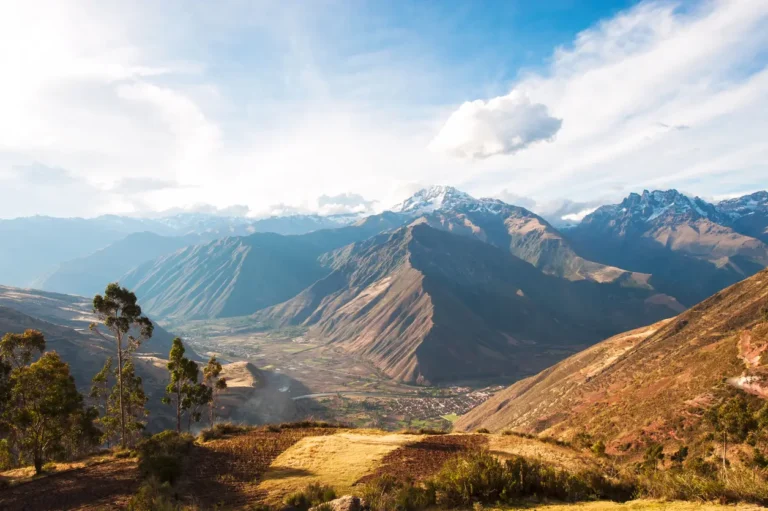
To fully experience the Andes beyond the city, you can travel to the Sacred Valley. Here, you can explore traditional villages, terraced fields, and local markets at a relaxed pace. The valley shows how agriculture, trade, and community life evolved long before the Spanish arrived. Visiting the Sacred Valley gives you context for the foods, traditions, and festivals you experienced in Cusco.
Pisac and Ollantaytambo
Two highlights of the Sacred Valley are Pisac and Ollantaytambo. In Pisac, you can wander among terraces and ceremonial sites while also visiting its vibrant market, giving you a glimpse of daily Andean life. In Ollantaytambo, the fortress and cobbled streets offer a well-preserved example of Inca planning and architecture. When you explore these towns, you see how history, culture, and community are intertwined, just as they are in the preparation and sharing of Chiri Uchu.
By visiting these sites after experiencing Chiri Uchu and Corpus Christi, you gain a fuller appreciation for the richness of Cusco and its surroundings. This journey helps you connect the festival foods, colonial influences, and Inca legacies into a deeper understanding of Andean culture and history.
Frequently Asked Questions
Chiri Uchu is a unique dish with a rich history, so it’s natural to have questions about it. This section answers some of the most common questions about it.
How long does it take to prepare Chiri Uchu?
Preparing Chiri Uchu can take several hours because each ingredient—meats, vegetables, cheeses, and chilies—must be cooked or prepared separately. Arranging the components neatly and balancing flavors is also an important part of the process.
Is Chiri Uchu spicy?
Chiri Uchu can be spicy as it traditionally includes rocoto, a type of Peruvian chili pepper. However, the level of spiciness can be adjusted to suit personal preferences. The dish is celebrated for its diverse flavors rather than its heat.
Does Chiri Uchu include meat?
Yes, Chiri Uchu typically includes several types of meat, such as chicken and dried meat. Meats are often cooked and seasoned in various ways to add to the dish’s rich flavor profile. The use of meat is integral to the traditional Chiri Uchu preparation.
Is Chiri Uchu always made with cuy?
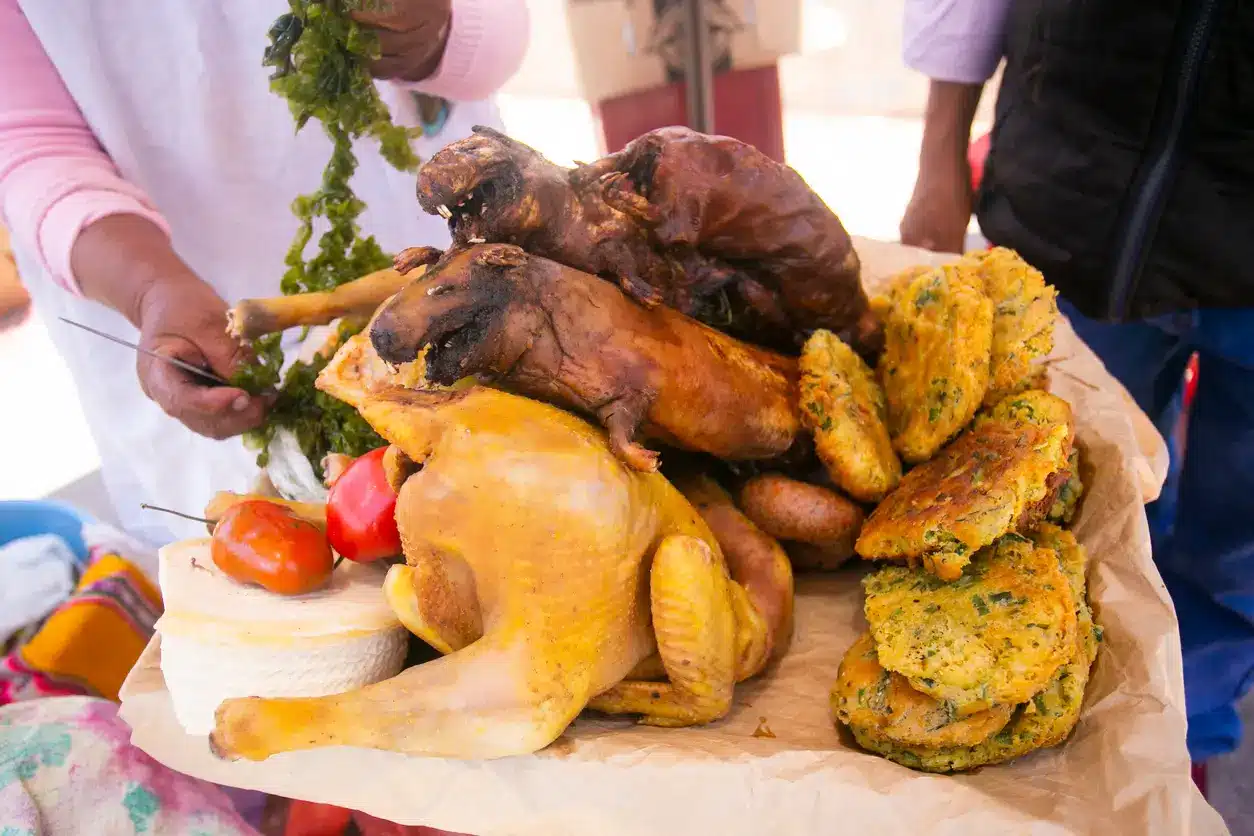
While cuy (guinea pig) is a traditional and celebrated ingredient, not all versions include it. Regional variations, family traditions, and personal preferences determine whether cuy is included, but it remains a notable part of many traditional recipes.
Can Chiri Uchu be made without chili peppers?
Yes, Chiri Uchu can be made without chili peppers if you prefer a milder taste. While rocoto offers a distinctive flavor, it can be omitted or substituted to suit personal tastes. Adjusting spiciness allows more people to enjoy the dish.
How is Chiri Uchu served?
Chiri Uchu is traditionally served cold and arranged neatly with each ingredient visible. The presentation is often as important as the flavor, honoring the dish’s cultural significance. Typically, it is served as a single plate, showcasing a colorful and varied feast.
Do people eat Chiri Uchu with utensils or by hand?
Chiri Uchu is typically eaten with utensils to manage the variety of ingredients neatly. Using utensils allows one to enjoy the different components in each bite. This approach respects the dish’s arrangement and presentation.
Can Chiri Uchu be eaten outside Corpus Christi?
Yes, Chiri Uchu can be enjoyed outside the Corpus Christi celebration, although it is traditionally associated with this festival. Some restaurants may offer it year-round, especially in regions with strong ties to local culinary practices. Its festive origins make it popular during specific times but not limited to them.
How has Chiri Uchu changed over time?
Chiri Uchu has evolved with modifications in ingredients and presentation while maintaining its traditional base. The influence of different cooking methods and cultural tastes has led to new versions. However, it still reflects its historical significance and cultural roots.
Can Chiri Uchu be bought in markets?
In Cusco, you may find ingredients for Chiri Uchu in local markets, such as dried meats, corn, cheese, and chilies. Fully prepared Chiri Uchu is less common and is usually made at home, for festivals, or served in traditional restaurants.
Can Chiri Uchu be eaten on its own, or is it paired with other foods?
Chiri Uchu is typically enjoyed on its own due to its comprehensive mix of ingredients offering a full meal. Each component contributes to a well-rounded dish, providing a balance of flavors and textures. Pairing with additional foods is not common as the dish is complete by itself.
What makes Chiri Uchu different from other Peruvian dishes?
Chiri Uchu stands out due to its cultural significance and the combination of cold components, which is distinctive among Peruvian foods. Its variety of ingredients spanning different food groups provides a unique eating experience. Furthermore, it holds a special place in the celebration of Corpus Christi, differentiating it culturally from other dishes.
Final Thoughts
Chiri Uchu is more than just a traditional recipe—it is the history and identity of Cusco in every bite. From its origins in the pre-Hispanic period to its role in the Catholic celebration of Corpus Christi, the dish reflects a blending of cultures rather than the replacement of one by another. Every ingredient and preparation step tells a story of how different ideas and civilizations have come together in Cusco over time.
Today, Chiri Uchu continues to bring communities together through shared rituals and celebrations. Because it is prepared only once a year, the dish holds a special place in local life, reminding people of the importance of coming together and honoring traditions. Its annual preparation makes it a symbol of continuity and care, passed from one generation to the next.
Through Chiri Uchu, Cusco preserves its living heritage. Each serving carries memory, culture, and identity, allowing both locals and visitors to connect deeply with the city’s past and present. In every bite, the dish tells the story of a city that honors its history while keeping its traditions alive.
As you reflect on the traditions behind Chiri Uchu, you may feel inspired to explore more of Cusco and its surroundings. A visit to Machu Picchu provides another way to connect with the region’s history. Traveling there aboard the Inca Rail offers a comfortable and scenic journey, letting you carry the stories, flavors, and memories of Cusco from the city into the Sacred Valley. Along the way, you can appreciate the landscapes and heritage that make this region so unique.