
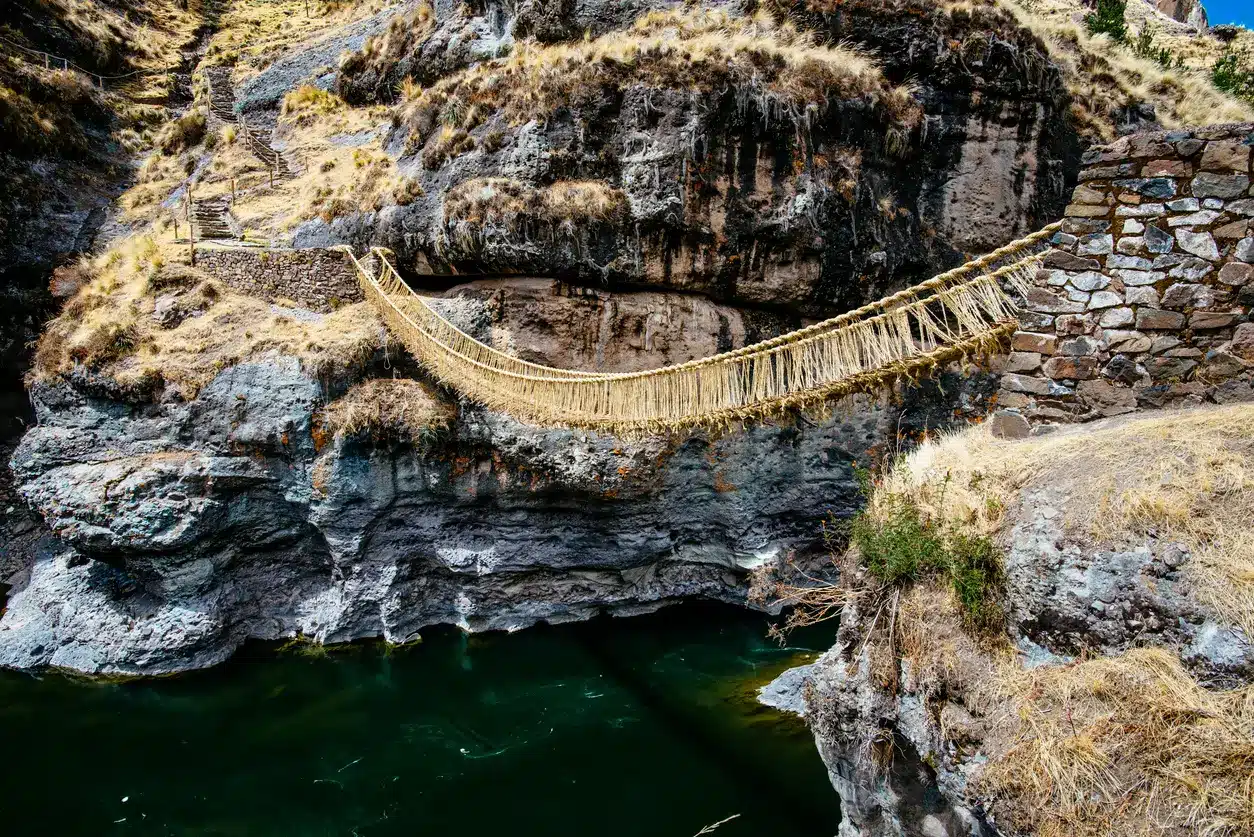
Visiting Q’eswachaka Bridge: Discovering the Ancient Design and Traditions Behind Peru’s Rope Bridge
Some traditions disappear with time, while others continue because people choose to keep them alive. Q’eswachaka is one of those traditions. For generations, local Quechua communities in Peru have gathered each year to rebuild this traditional Inca rope bridge, keeping an ancient skill alive and preserving an important part of their cultural heritage.
What makes the story even more interesting is what the Q’eswachaka bridge is made from: woven Andean grass fibers transformed into strong ropes through traditional techniques. No machines or large construction crews are involved. Instead, the bridge is built through the skill, patience, and cooperation of the local communities who have learned the craft from those who came before them.
The tradition also shows how closely history and daily life are connected. Once part of the historic Inca road network, the bridge remains a living symbol of community cooperation and cultural identity. Its annual reconstruction brings people together to share knowledge, practice traditional skills, and celebrate their heritage.
If you are planning a trip to Peru, Q’eswachaka offers a unique opportunity to discover how ancient engineering and living traditions continue to shape local life. Keep reading to learn about the bridge’s design, the people who rebuild it, and what makes it worth visiting.
What will you find here?
- What Is the Q’eswachaka Bridge?
- What Makes Q’eswachaka Different From Ordinary Bridges?
- The Ancient Design of the Q’eswachaka Bridge
- How Q’eswachaka Bridge Is Rebuilt Every Year
- The Communities Behind Q’eswachaka
- The Traditions and Ceremonies of Q’eswachaka
- How to Get From Cusco to Q’eswachaka
- What to See and Do at Q’eswachaka
- Tips for Visiting Q’eswachaka
- Frequently Asked Questions
- Final Thoughts
What Is the Q’eswachaka Bridge?
The Q’eswachaka Bridge is a traditional suspension bridge made from q’oya grass, a hardy plant that grows in the Andean highlands. It crosses the Apurímac River and is rebuilt by hand each year using techniques passed down through generations. This practice remains an important part of the cultural heritage of local Quechua communities.
To build the bridge, community members twist the grass fibers into ropes and braid them together to form its suspension structure and walkway. The technique reflects bridge-building knowledge from the Inca period and demonstrates the craftsmanship behind this enduring tradition.
Where Is the Q’eswachaka Bridge?
The Q’eswachaka bridge is located in Quehue District, Canas Province, in the Cusco Region of southern Peru. It spans the Apurímac River in the Andes, surrounded by rugged mountains, deep valleys, and open countryside.
Situated in a remote rural area, the bridge offers visitors a glimpse of the Andean landscape beyond Peru’s major tourist destinations. Its location above the Apurímac River also highlights the ingenuity of traditional bridge construction in this mountainous region.
What Makes Q’eswachaka Different From Ordinary Bridges?
Unlike modern bridges built with steel or concrete, Q’eswachaka is made from q’oya grass woven into thick ropes. The materials and construction methods give the bridge a distinctive design that reflects traditional Andean engineering.
Here are some of the things that set Q’eswachaka apart from ordinary bridges:
It is made from natural grass
Q’eswachaka is made from q’oya grass, which is twisted and braided into strong ropes. These ropes form the main suspension cables and the woven walking surface. Because grass fibers naturally wear down over time, the bridge requires regular replacement.
It uses traditional Inca-era techniques
Q’eswachaka reflects suspension-bridge construction techniques associated with the Inca period. Its structure depends on the careful arrangement and tension of braided plant-fiber ropes. The methods used to prepare and assemble these ropes have been passed down through generations, preserving practical knowledge of traditional Andean engineering.
It is renewed every year
Most modern bridges are designed to remain in place for decades, with inspections and repairs carried out as needed. Q’eswachaka follows a different approach: the old bridge is replaced each year with newly prepared grass ropes. The rebuilding takes several days and requires careful coordination at every stage.
The work is done by the local communities
The renewal involves members of four communities: Huinchiri, Chaupibanda, Choccayhua, and Ccollana Quehue. The process brings community members together to prepare materials, make ropes, and assemble the bridge. Their shared responsibilities and practical experience are essential to completing the work each year.
The bridge is part of a living tradition
For Q’eswachaka, rebuilding the bridge is not only a construction project. The process includes traditional rituals and ceremonies connected to Andean beliefs and customs. These activities accompany the physical work and give the annual event cultural significance.
What makes Q’eswachaka truly different is the connection between the bridge and the people who build it. The structure may be made from simple grass, but the knowledge and tradition behind it have continued for generations.
The Ancient Design of the Q’eswachaka Bridge
The Q’eswachaka bridge is a traditional suspension bridge made from woven grass ropes. Measuring approximately 28 to 33 meters (92 to 108 feet) long and about 1.20 meters (3.9 feet) wide, it spans the Apurímac River without pillars or rigid supports beneath it. Its design relies on a system of suspension cables secured to the riverbanks.
The bridge’s structure consists of thick supporting ropes, a woven walkway, and side handrails. The main cables carry the walkway, while smaller connecting ropes link the sides to the floor. Stone anchors at both ends hold the supporting cables in place, allowing the bridge to hang above the river.
Unlike steel or concrete bridges, Q’eswachaka has a flexible structure that can sway slightly as people cross. Its design demonstrates how plant fibers can be arranged into a functional suspension system suited to the steep terrain of the Andes. The combination of supporting cables, handrails, and a woven floor gives the bridge its distinctive appearance and practical purpose.
How Q’eswachaka Bridge Is Rebuilt Every Year
Every June, the four Quechua-speaking communities of Huinchiri, Chaupibanda, Choccayhua, and Ccollana Quehue gather to renew the Q’eswachaka Bridge. The tradition combines traditional bridge-building knowledge with ceremonies that reflect the communities’ spiritual connections to the land, the mountains, and their ancestors.
The renewal takes place over three days, followed by a fourth day of celebration. Each day has a specific purpose, from making ritual offerings and removing the old bridge to weaving its replacement and celebrating its completion.
1. Seeking Permission From the Apus
The first day begins with a traditional ceremony led by a paqo, an Andean spiritual specialist. Before the bridge renewal proceeds, offerings are made to Pachamama, or Mother Earth, and the Apus, the sacred mountain spirits believed to protect the communities.
These ceremonies express respect for the spiritual forces associated with the land and seek protection for the work ahead. Offerings may include coca leaves, corn, and other traditional items arranged as part of a ritual. The ceremony marks the spiritual beginning of the renewal, which combines practical work with long-standing Andean customs.
2. Saying Goodbye to the Old Bridge
The second day marks the removal of the previous bridge, a process known as Chaka Chutay, which refers to pulling down or removing the bridge. Following another ceremony of offerings, the old grass ropes are detached from their anchor points, allowing the worn structure to be taken down.
Meanwhile, the newly prepared q’oya grass ropes are brought into position. The thick main ropes, which will support the walkway and handrails, are stretched across the gorge and secured to the traditional stone anchors on either side. This stage requires coordinated effort to position and tighten the ropes properly before the weaving begins.
Removing the old bridge and positioning the new ropes mark the transition to the next stage of construction. The main cables provide the foundation for the bridge builders to create the new walkway.
3. Weaving the New Q’eswachaka
On the third day, skilled bridge builders known as chakaruwaq work on weaving the new bridge. Working from opposite ends, they connect and weave the grass ropes to form the walkway, gradually progressing toward the center until the two sides meet.
By the end of the weaving process, the new bridge is ready to serve as a crossing for the coming year. The completed structure reflects the builders’ knowledge of how the grass ropes must fit together to form a usable suspension bridge.
This stage requires experience and precision. The builders must position and secure the ropes correctly so that the walkway and side handrails form a connected structure. Other community members assist with the work, helping complete the different sections.
4. Celebrating the New Bridge
The completion of the bridge is followed by a day of celebration involving the four communities. Traditional music, dancing, food, and other festivities mark the end of the renewal.
The celebration is an important part of the tradition because Q’eswachaka is not viewed simply as a bridge that needs to be replaced. Its annual renewal strengthens relationships between the communities and keeps their knowledge, rituals, and cultural identity alive.
What makes the annual renewal of Q’eswachaka remarkable is that the bridge is never separated from the traditions surrounding it. The work, ceremonies, and celebrations are all part of the same process, allowing the communities to maintain not only the bridge itself but also the knowledge and cultural practices connected to it.
Each new Q’eswachaka may last only a year, but the tradition behind it continues from one generation to the next. Through this annual practice, the communities continue to pass on the techniques and customs associated with Q’eswachaka, ensuring that both the bridge-building knowledge and the ceremonies surrounding it remain part of community life.
The Communities Behind Q’eswachaka
Q’eswachaka is maintained by four Quechua-speaking communities in Quehue District, Canas Province, Cusco. Each year, they come together through minka, a traditional practice of communal work, to rebuild the bridge and participate in the ceremonies associated with its renewal.
- Huinchiri: One of the communities on the left bank of the Apurímac River, Huinchiri participates in the annual rebuilding and helps preserve the knowledge behind the bridge’s construction.
- Chaupibanda: Also located on the left bank, Chaupibanda contributes to the communal labor and traditional practices involved in renewing the bridge.
- Choccayhua: Another community on the left bank, Choccayhua shares responsibility for the annual renewal, working alongside the other communities to maintain the bridge.
- Ccollana Quehue: Located on the opposite bank of the Apurímac River, Ccollana Quehue participates in the same communal tradition, helping bring the four communities together through the annual rebuilding.
The bridge serves both as a river crossing and as a shared responsibility. Its annual renewal gives the four communities an opportunity to work together, pass on traditional knowledge, and maintain a practice that remains an important part of their cultural heritage.
The Traditions and Ceremonies of Q’eswachaka
The yearly renewal of Q’eswachaka includes ceremonies and communal activities that reflect the Andean beliefs and customs of the four Quechua-speaking communities. Alongside rebuilding the bridge, participants honor spiritual traditions, share responsibilities, and celebrate the completion of their collective work.
Offerings to Pachamama and the Apus
Before the rebuilding begins, ceremonies are held to honor Pachamama, or Mother Earth, and the Apus, the sacred mountain spirits associated with protection. A paqo, an Andean spiritual specialist, leads the rituals and presents offerings on behalf of the community.
These offerings express respect for the natural world and reflect the role of Andean spiritual beliefs in community life. The ceremony gives the bridge renewal a spiritual dimension beyond the practical work of rebuilding.
The Practice of Minka
Minka is a traditional Andean practice of communal work carried out for the benefit of a community. During the Q’eswachaka renewal, members of the four communities contribute their time and skills to help complete the bridge.
The work depends on cooperation, with participants sharing responsibilities throughout the renewal. Younger members can also learn by observing and working alongside experienced builders, gaining practical knowledge through participation.
Traditional Music and Dance
Music and dance are also part of the celebrations surrounding the renewal. After the bridge has been completed, members of the communities gather for traditional performances, food, and festivities.
These activities give the annual event a social side beyond the bridge itself. People are not only gathering to complete a task; they are also coming together to mark another year in which their shared tradition has continued.
Passing Down Cultural Knowledge
The Q’eswachaka tradition involves more than bridge construction. It includes knowledge of grass-rope making, construction techniques, ceremonial practices, and the organization of communal work.
Much of this knowledge is passed on through observation and participation. By taking part in the annual renewal, younger generations have opportunities to learn the skills and customs associated with the bridge from those who practice them.
The traditions surrounding Q’eswachaka connect spiritual beliefs, shared labor, cultural expression, and practical knowledge. Together, these practices help explain why the annual renewal remains significant to the communities beyond the construction of the bridge itself.
How to Get From Cusco to Q’eswachaka
Q’eswachaka Bridge is located in the rural district of Quehue, in Peru’s Canas Province, approximately 3 to 4 hours by road from Cusco, depending on the route and road conditions. Visiting the bridge is usually a full-day trip, so it is best to leave early.
By public transportation: You can take a bus from Cusco toward Combapata or Sicuani, then continue toward Yanaoca and Quehue. From there, you will need local transportation or a taxi to reach the bridge. This option requires more planning because connections may be limited.
By private car or taxi: Hiring a private driver offers more flexibility and makes it easier to reach the bridge directly. Some sections of the route use rural roads, so allow extra time for the journey.
By guided tour: The easiest option is to book a day trip from Cusco. Many tours include round-trip transportation, a guide, and stops at nearby attractions.
Reaching Q’eswachaka takes some planning, but the journey from Cusco offers a chance to experience the quieter side of the Peruvian Andes. Whether you travel with a guide or arrange your own transportation, allow plenty of time to enjoy the scenery and explore the area around the bridge.
What to See and Do at Q’eswachaka
Visiting Q’eswachaka offers more than a chance to see an unusual bridge. The experience combines traditional engineering, Andean scenery, and a closer look at rural life in the Cusco region.
Walk Across Q’eswachaka Bridge
If access is permitted, walk across the grass suspension bridge to experience its narrow, flexible walkway firsthand. The gentle movement underfoot offers a different experience from crossing a conventional wooden, steel, or concrete bridge. Follow local safety instructions and avoid crossing when access is restricted.
See the Apurímac River Below
From the bridge, look down toward the Apurímac River as it winds through the steep Andean landscape. The river and deep gorge provide a striking view of the terrain the bridge was designed to cross.
Explore the Surrounding Landscape
Take time to appreciate the mountains, open hillsides, and rural surroundings. The remote setting offers a different perspective on the Cusco region, away from the busy streets and archaeological sites closer to the city.
Learn About Traditional Bridge-Making
If local guides or community members are available, ask about the grass ropes, suspension structure, and traditional construction techniques. A knowledgeable guide can help explain how the bridge is designed and why its annual reconstruction remains important.
Witness the Annual Renewal in June
If you visit during the annual renewal, you may have an opportunity to observe parts of the rebuilding process, along with traditional ceremonies, music, and dancing. Activities vary throughout the event, so check the schedule before planning your visit.
Photograph the Bridge and Scenery
Q’eswachaka offers opportunities to photograph the woven structure, the river below, and the surrounding mountains. For close-up photographs of community members or ceremonies, ask permission first and respect any restrictions on photography.
Visit Nearby Attractions
If you have extra time, consider combining your visit with the Four Lagoons circuit in the Canas area. This makes it possible to explore more of the countryside around Cusco as part of the same trip, although travel times and road conditions should be considered when planning your itinerary.
A visit to Q’eswachaka allows you to experience both the bridge and the landscape in which it stands. Taking time to understand its construction and cultural significance can make the journey more meaningful.
Tips for Visiting Q’eswachaka
Visiting Q’eswachaka requires more planning than visiting attractions in central Cusco. The bridge is in a remote part of the Andes, where transportation and visitor services are limited. Preparing for the journey, changing weather, and high altitude can help make your visit more comfortable.
- Plan for a full-day trip: The drive from Cusco takes several hours each way. Leave early and allow extra time for road conditions and stops along the route.
- Check the road and weather conditions: Rural mountain roads can be affected by rain and changing weather. Check local conditions before departure, especially during the rainy season.
- Bring water and sun protection: The high-altitude sun can be strong even when the air feels cool. Carry drinking water, sunscreen, sunglasses, and a hat.
- Wear comfortable shoes: The area around the bridge can have uneven ground, so comfortable walking shoes are a better choice.
- Allow time to adjust to the altitude: Q’eswachaka is in a high-altitude region. If you have just arrived in Cusco, give yourself time to adjust to the elevation before undertaking a long day trip.
- Carry some cash: Shops and other services may be limited in the surrounding area. Bring some Peruvian soles for local purchases and other expenses.
- Respect local ceremonies and customs: If you visit during the annual renewal, remember that the event is an important cultural and religious occasion for the communities. Ask before photographing people or ceremonies.
- Follow bridge safety rules: If crossing is permitted, follow local instructions and use the handrails. Avoid jumping, swinging, or deliberately making the bridge sway, and respect any access restrictions.
With a little preparation, you can spend less time worrying about logistics and more time appreciating Q’eswachaka’s remarkable structure and Andean surroundings. The remote location is an important part of the experience, so allow enough time to enjoy the journey.
Frequently Asked Questions
In this section, you’ll find answers to frequently asked questions about Q’eswachaka, including its history, traditional construction, annual renewal, location, and travel tips to help you plan your visit.
What does the name “Q’eswachaka” mean?
Q’eswachaka is a Quechua word, the language spoken by many people in the Andes. It is commonly understood to mean “grass rope bridge,” which describes the natural fibers used to build it. The name highlights the bridge’s traditional design and its roots in Andean culture.
How old is the Q’eswachaka Bridge?
The bridge-building tradition dates back to the Inca period, which flourished before the Spanish conquest in the 16th century. However, the bridge itself is rebuilt every year, so it is not physically old, but the skills and knowledge behind it have been passed down for generations.
How did the Q’eswachaka Bridge originate during the Inca Empire?
The bridge follows the Inca tradition of making rope suspension bridges to cross rivers and valleys. These bridges helped connect people and made travel easier along the Inca roads. Q’eswachaka keeps this old way of building alive in the Cusco region of Peru.
How does the Q’eswachaka Bridge compare with other ancient Inca engineering achievements?
Just like Inca stone walls, terraces, and roads, Q’eswachaka shows how the Incas adapted their building to the Andes. Instead of stone or fitted masonry, this bridge is made from braided grass ropes. Rebuilding it every year keeps this unique tradition alive, which is different from other Inca structures that have lasted for centuries.
Why must the Q’eswachaka Bridge be rebuilt every year?
The bridge is built from natural grass fibers, which get weaker over time because of use and weather. Rebuilding it every year means the old ropes are replaced with new ones, keeping the bridge safe. This also lets local people keep practicing their traditional bridge-building skills.
Is it safe to walk across the Q’eswachaka Bridge?
Visitors can cross the Q’eswachaka bridge when it is open and local organizers permit access. The narrow grass walkway may sway as people walk, so follow safety instructions, use the handrails, and avoid sudden movements. Anyone who feels uncomfortable with heights or moving bridges may prefer to admire it from the riverbank.
Can visitors observe the Q’eswachaka bridge-renewal ceremony?
Yes, visitors may be able to observe parts of the annual bridge-renewal ceremony, usually held in June. The event includes traditional construction work, cultural rituals, music, and dancing involving four local communities. Check the dates and visitor arrangements in advance, and respect local customs during the ceremonies.
Is there an entrance fee to visit the Q’eswachaka Bridge?
There may be an entrance fee or local charge, depending on the rules when you visit. Guided tours from Cusco might include transport and other services, but prices can change. Check with your tour operator or local officials for the latest fees before you go.
Is the Q’eswachaka Bridge suitable for travelers with no hiking experience?
Yes, you do not need hiking experience to visit the Q’eswachaka Bridge. However, getting there means a long drive from Cusco, and the area can have uneven ground and high altitude. Wear comfortable shoes, walk at your own pace, and give yourself time to get used to the altitude.
Can travelers combine a visit to the Q’eswachaka Bridge with other attractions in the Cusco region?
Yes, travelers can combine Q’eswachaka with nearby attractions, including the Four Lagoons circuit in the Canas area. These stops offer views of rural Andean landscapes and lakes beyond Cusco’s main tourist sites. A private driver or organized tour can help coordinate the route and make the most of a full day.
Where are the best places to take photographs of the Q’eswachaka Bridge?
You can get great views of the bridge from the riverbanks and nearby viewpoints, where you can see it stretching over the Apurímac River. Taking photos from a distance shows the whole bridge and the beautiful Andean scenery. If you want close-up photos of local people or ceremonies, always ask for permission and follow any photography rules.
Final Thoughts
Q’eswachaka offers a different perspective on Peru’s Inca heritage. Made from woven grass ropes and rebuilt by hand each year, the bridge shows how traditional engineering continues to be practiced in the Andes. Its design, history, and connection to local communities make it a worthwhile stop for travelers interested in Peru beyond its better-known archaeological sites.
Getting to Q’eswachaka takes some planning, as the bridge is located in a rural part of the Cusco region. However, the journey offers views of the Andean countryside and a chance to learn about a tradition that remains part of local life. Whether you visit during the annual renewal or at another time of year, taking time to understand the bridge’s history adds depth to the experience.
If you’re planning to explore more of Peru, Inca Rail can help you continue your journey to Machu Picchu. Our train services offer a scenic way to travel from Ollantaytambo to Machu Picchu Pueblo, providing convenient access to one of the country’s most famous historical destinations.
You can also explore our tour packages to discover more of Cusco and Machu Picchu as part of your Peru itinerary. Whether you want to experience ancient Inca sites, enjoy the region’s mountain scenery, or learn more about its cultural heritage, Inca Rail can help you plan a memorable journey through Peru.


