Peru’s Inca Landscape: Exploring the Machu Picchu Mountain Range and Its Famous Peaks
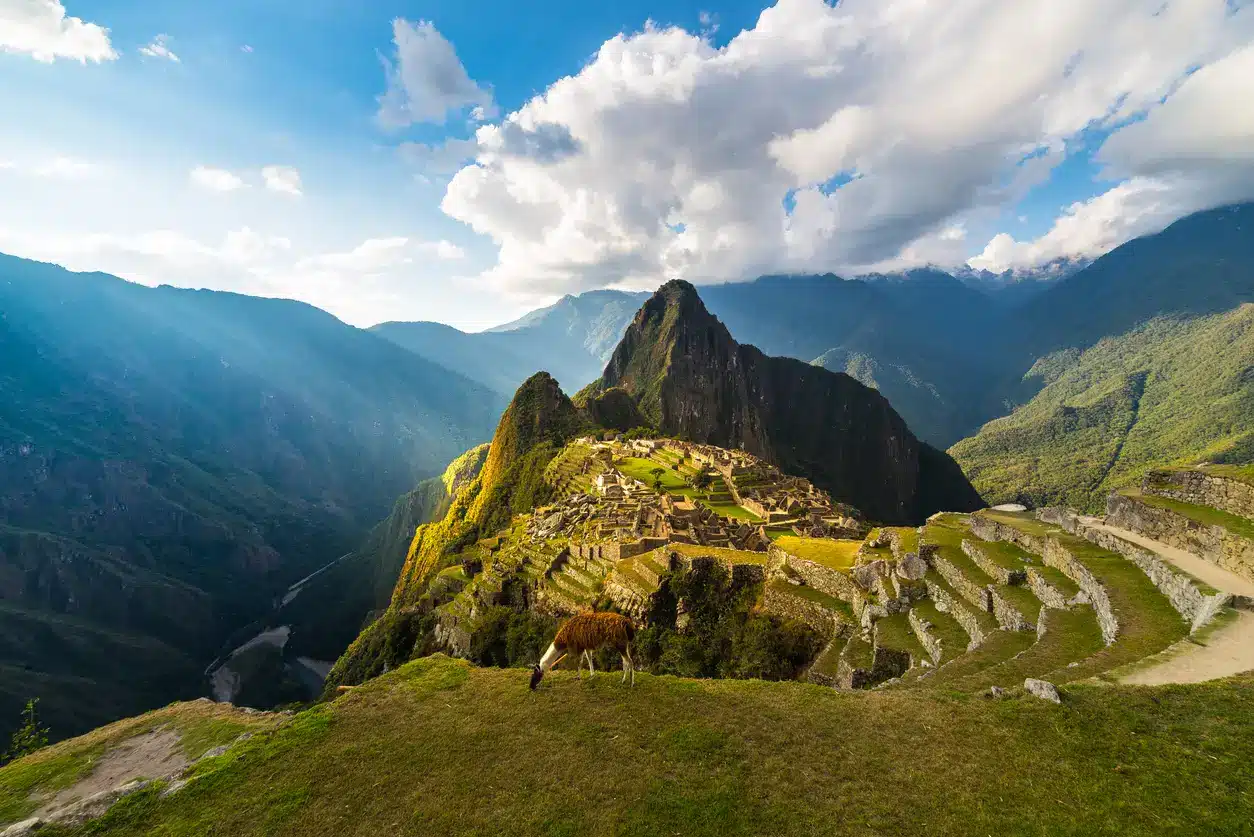
At Machu Picchu, mountains are part of almost every view. Steep green slopes surround the ancient Inca site, while deep valleys and tropical forests spread across the landscape. Located in the Peruvian Andes, Machu Picchu sits about 2,430 meters above sea level in a tropical mountain forest. Mist and clouds often move across the slopes, and the scenery can look different throughout the day. On clear days, visitors can enjoy panoramic views of the surrounding mountains and valleys.
The mountains are closely connected to the history of Machu Picchu. The Incas built the site on a steep mountain ridge, using the slopes to create terraces, paths, and spaces for buildings. Stone walls supported the terraces, while paths connected different parts of the site. The terraces also provided flatter areas for growing crops on the steep slopes. Many of these terraces, walls, and paths can still be seen around the site today.
Often described online as the “Machu Picchu mountain range,” the mountains around the site are part of the eastern Andes. The area includes steep slopes, valleys, forests, and several well-known peaks. Huayna Picchu and Machu Picchu Mountain are two of the peaks that visitors can hike. The mountain trails also offer views of Machu Picchu and the valleys below. For many visitors, the combination of the ancient Inca site and its dramatic mountain setting is a major part of what makes Machu Picchu so memorable.
What will you find here?
- Understanding the Machu Picchu Mountain Landscape
- The Famous Mountain Peaks Around Machu Picchu
- When to Visit the Machu Picchu Mountains
- Planning a Visit to the Machu Picchu Mountain Peaks
- Frequently Asked Questions
- Final Thoughts
Understanding the Machu Picchu Mountain Landscape
Machu Picchu is part of a much larger mountain landscape. The ruins sit within the Historic Sanctuary of Machu Picchu, where steep slopes, high peaks, river valleys, and forests come together. The Incas built the settlement on a narrow mountain ridge, making use of nature. The result is a site that fits closely into the landscape around it, with terraces, paths, and buildings following the contours of the mountains.
Where Is Machu Picchu Located?
Machu Picchu is in the Cusco Region of southern Peru, on the eastern side of the Andes. The archaeological site sits at about 2,430 meters (7,972 feet) above sea level, while the mountains around it rise much higher.
The site is also above the Urubamba River, which curves through the valley below. This puts Machu Picchu between the higher mountain slopes and the lower river valley, creating a noticeable change in elevation around the site. From different points around the area, you can look down toward the river and valleys or up toward the surrounding mountain slopes.
What Does the Landscape Look Like?
The landscape around Machu Picchu is a mix of steep slopes, rocky areas, dense forest, and narrow valleys. Its location brings more moisture to the region, helping support the thick vegetation found around the sanctuary.
Weather also plays a big part in how the landscape looks. Clouds and mist can move across the mountains and change the views within a short time. On a clear day, the surrounding peaks and valleys are easier to see. When clouds move in, they can cover parts of the mountains and ruins, so the same view can look quite different later in the day.
Why Are the Mountains Important to Machu Picchu?
The mountains are an important part of Machu Picchu. They surrounded the site, influenced how the Incas built it, and were also important in Inca beliefs. The steep slopes shaped the way terraces, paths, and structures were built, while the surrounding peaks and valleys form the landscape visitors see today.
The mountains are important to Machu Picchu for several reasons:
- They create spectacular views: Mountains and valleys surround the ruins, giving you different views from different parts of the site.
- They are part of the site’s setting: The Incas built terraces, paths, and structures to follow the natural shape of the mountain slopes.
- They offer places to explore: Mountain trails lead to higher viewpoints and provide different perspectives of Machu Picchu.
- The scenery changes throughout the day: Mist, clouds, sunlight, and rain can change how the mountains and ruins look.
- They have cultural importance: Mountains held an important place in Inca beliefs, and some were considered sacred apus, or sacred mountains.
The mountains are a big part of what makes Machu Picchu special. They surround the entire citadel, create spectacular views, and show how the Incas made the most of the natural landscape around them.
The Famous Mountain Peaks Around Machu Picchu
Machu Picchu is surrounded by several impressive mountains that add to the beauty and character of the area. Machu Picchu Mountain, Huayna Picchu Mountain, Huchuy Picchu Mountain, and Putucusi Mountain each have their own landscape, trails, and views.
For travelers, the main differences are the difficulty of the hike, the type of views, the trail conditions, and how the mountain can be accessed. The comparison below gives you a quick look at what to expect before we explore each mountain in more detail.
| Key Features | Machu Picchu Mountain | Huayna Picchu Mountain | Huchuy Picchu Mountain | Putucusi Mountain |
| Main appeal | High viewpoint with wide views of Machu Picchu and the surrounding mountains | Steep climb with elevated views of Machu Picchu and the valley | Shorter climb with views of Machu Picchu and the surrounding mountains | Mountain experience with views toward Machu Picchu |
| Difficulty | Moderate to challenging | Challenging | Moderate | Challenging terrain |
| Views | Wide views of the citadel, mountains, and valleys | Elevated views of Machu Picchu and the surrounding landscape | Views of the citadel and nearby mountains | Views toward Machu Picchu and the surrounding landscape |
| Trail | Uphill trail with stone steps | Steep trail with many stone steps and narrow sections | Short uphill trail with stone steps | Steep and rugged terrain |
| Access | Circuit 1, Route 1-A | Official Route 3-A | Official Route 3-D | Not part of the current official Machu Picchu visitor routes |
| Ticket | Requires a ticket for this route | Requires a ticket for this route | Requires a ticket for this route | No current official Machu Picchu route ticket |
| Good for | Travelers who want wide mountain views | Travelers looking for a more demanding climb | Travelers who want a shorter mountain hike | Experienced hikers looking for a less-developed route |
Machu Picchu Mountain, Huayna Picchu, and Huchuy Picchu are accessed through the official Machu Picchu visitor route system and require the appropriate ticket. Putucusi is different because it is not part of the current official visitor routes. Route availability and access rules can change, so check the latest official information when planning your visit.
Machu Picchu Mountain
Machu Picchu Mountain rises above the archaeological site and offers some of the widest views of the surrounding landscape. The trail takes you higher into the mountains, giving you a different perspective of the Machu Picchu citadel, surrounding peaks, and valleys. Because the hike involves a long, steady climb, it is a good choice for travelers who want to spend more time walking through the mountain landscape.
Features of Machu Picchu Mountain
- Wide Views: The higher you climb, the more of the surrounding landscape you can see. From the upper parts of the trail, you can look across the citadel, surrounding mountains, and valleys below.
- Hiking Difficulty: The trail is generally considered moderate to challenging because of the steady uphill climb and many stone steps. You do not need technical climbing skills, but a reasonable level of fitness will make the hike more comfortable.
- Trail: The route follows an uphill mountain path with many stone steps. The climb is steady, so travelers should take their time and rest when needed. The trail can feel more demanding in the heat, so starting prepared with enough water is important.
- Route: Machu Picchu Mountain is accessed through Route 1-A, which is part of Circuit 1, the Panoramic Circuit.
- Access: You need a ticket that includes the Machu Picchu Mountain route. The number of visitors is controlled, so the route needs to be selected when booking your ticket.
- Time: This is not a short walk to a viewpoint. Allow several hours for the mountain route and the rest of your Machu Picchu visit, and avoid planning another activity immediately afterward.
- Best For: This hike is a good option for travelers who want wide panoramic views and a longer but steady uphill hike.
- What to Bring: Comfortable walking shoes, water, sun protection, and light clothing layers are useful. Weather can change quickly in the mountains, so a light rain layer is also worth carrying.
- Good to Know: The route is more about the wide landscape than a close-up view of the ruins. If your main goal is to see Machu Picchu from a high, dramatic position, Huayna Picchu offers a different type of viewpoint.
Huayna Picchu Mountain
Huayna Picchu is the tall peak that rises behind Machu Picchu in the classic view of the citadel. Its steep trail takes you high above the ruins and offers a close-up view of the surrounding mountains and valley. The hike is more demanding than a regular visit to the archaeological site, especially because of the steep stone steps and narrow sections.
Features of Huayna Picchu Mountain
- Steep Trail: The trail includes many steep stone steps and narrow sections. Some parts require extra care, particularly for travelers who are uncomfortable with heights. The trail can also feel more difficult when wet.
- Hiking Difficulty: Huayna Picchu is considered a challenging hike. A good level of fitness and confidence on steep mountain paths are helpful. It is better suited to travelers who are comfortable with heights and uneven terrain.
- Views: The higher sections provide elevated views of Machu Picchu, the Urubamba River valley, and the surrounding mountains. The position gives you a very different perspective of the citadel.
- Height: Huayna Picchu reaches about 2,693 meters (8,835 feet) above sea level.
- Route: Huayna Picchu is accessed through Route 3-A, Waynapicchu Mountain, which is part of Circuit 3.
- Access: Entry is controlled and spaces are limited. Travelers who want to hike Huayna Picchu should choose Route 3-A when booking their Machu Picchu ticket.
- Time: The full Machu Picchu and Huayna Picchu experience can take several hours, so travelers should allow enough time in their itinerary for the hike and the visit to the archaeological site.
- Best For: Huayna Picchu is a good choice for experienced or confident hikers who want a steep climb and elevated views of Machu Picchu.
- What to Bring: Wear comfortable shoes and carry only what you need. A light daypack, water, sun protection, and a rain layer are practical for this hike.
- Good to Know: If you have a strong fear of heights, Machu Picchu Mountain may be a more comfortable choice. Huayna Picchu is more about the steep climb and elevated position than an easy walk.
Huchuy Picchu Mountain
Huchuy Picchu means “Small Mountain” in Quechua and sits beside Huayna Picchu. Its trail is shorter than the hikes to Machu Picchu Mountain and Huayna Picchu, making it an option for travelers who want to experience a mountain trail without committing to a longer climb.
The hike still involves an uphill walk and stone steps, but the shorter route makes it easier to fit into a visit to Machu Picchu. It can be a good middle ground for travelers who want more than a standard visit to the ruins but do not want one of the longer mountain hikes.
Features of Huchuy Picchu
- Shorter Hike: Huchuy Picchu has a shorter uphill route than Machu Picchu Mountain and Huayna Picchu, so it generally requires less time and effort.
- Hiking Difficulty: The hike is generally considered moderate. It includes stone steps and an uphill climb, so travelers should still be comfortable walking on uneven mountain paths.
- Views: From the higher parts of the trail, you can enjoy views of Machu Picchu, nearby mountains, and the surrounding landscape.
- Trail: The route follows stone steps up the mountain. Although it is shorter, the climb can still feel steep in places. Good walking shoes are still recommended.
- Route: Huchuy Picchu is accessed through Route 3-D, Huchuypicchu, which is part of Circuit 3.
- Seasonal Access: Huchuy Picchu is currently listed as a high-season route, so travelers should check whether it is available during their travel dates.
- Ticket: You need to choose the Huchuy Picchu route when booking. A regular Machu Picchu ticket does not automatically include this mountain hike.
- Time: Because the hike is shorter, it can be easier to include in a day when you have other plans. Still, leave enough time to follow the assigned route without rushing.
- Best For: Huchuy Picchu is a good option for travelers who want a shorter mountain hike, scenic views, and a different perspective of the citadel.
- What to Bring: Comfortable shoes, water, sun protection, and a light rain layer are useful. The weather can change quickly around Machu Picchu.
- Good to Know: This is the most approachable of the three official mountain hikes for travelers who want a shorter experience, but remember that it is still a mountain trail.
Putucusi Mountain
Putucusi Mountain is part of the landscape surrounding Machu Picchu and rises across the Urubamba River from the archaeological site. Its steep, forested slopes give it a very different character from the three mountains with official visitor routes. It is included among the well-known peaks around Machu Picchu because of its prominent position in the landscape and its views toward the archaeological site, even though it is not one of the mountains available through the official visitor route system.
For travelers, Putucusi offers a different kind of mountain experience from Machu Picchu Mountain, Huayna Picchu, and Huchuy Picchu. It is not covered by a standard Machu Picchu ticket, so anyone interested in hiking should check the current local access and trail conditions separately before making plans.
Features of Putucusi Mountain
- Mountain Setting: Putucusi is surrounded by steep slopes and thick vegetation, adding to the mountain scenery around Machu Picchu.
- Views: From accessible areas of the mountain, there are views toward Machu Picchu and the surrounding landscape. The perspective is different from the official mountain routes.
- Trail: The traditional route is known for steep and rugged terrain, with fewer of the visitor facilities found on the official Machu Picchu mountain routes.
- Hiking Difficulty: The terrain can be challenging, particularly because of the steep sections and less-developed nature of the route. It is not the type of hike most visitors should add casually to a Machu Picchu itinerary.
- Access: Putucusi is not part of the current official Machu Picchu visitor routes. It does not have an official Machu Picchu mountain ticket like Machu Picchu Mountain, Huayna Picchu, or Huchuy Picchu.
- Planning: Travelers interested in Putucusi should check current local access, trail conditions, and safety information before planning a hike. Conditions and access can change, and it should not be treated like the three official mountain routes.
- Best For: Putucusi is more suitable for experienced hikers who specifically want a rugged, less-developed mountain experience rather than travelers simply looking for an additional viewpoint during their regular Machu Picchu visit.
- What to Bring: If access is confirmed, proper hiking shoes, water, sun protection, and rain protection are important. Because the route is not part of the official visitor system, travelers should be more cautious about current conditions and avoid relying solely on older online hiking guides.
Which Mountain Is Right for You?
The four mountains offer very different experiences. Machu Picchu Mountain is ideal for those seeking wide panoramic views and a longer, steady climb, while Huayna Picchu suits confident hikers who are comfortable with steep, exposed sections. Huchuy Picchu offers a shorter hike that is easier to fit into a busy itinerary. Putucusi is the most rugged option, so be sure to confirm whether access is currently possible before planning a climb.
Choosing the right mountain comes down to how much time you have, your comfort with steep trails, and the kind of views you want to enjoy. It’s also important to plan the practical details of your visit, as access to each mountain depends on the ticket and route you select. Consider your entry time, how you’ll get to the citadel, and whether you’ll need a guide to make the most of your visit.
Arranging your entry, guide, and transportation in advance can help you avoid unnecessary last-minute stress and spend more time enjoying the beauty of the Machu Picchu mountains.
When to Visit the Machu Picchu Mountains
The drier months from around April to October are generally the better time to hike the Machu Picchu mountains. May to September usually brings less rain, making the trails more manageable and giving you a better chance of clear views. June to August are popular months, so travelers should also expect more visitors and higher demand for mountain-route tickets.
The rainy season, generally from November to March, is less suitable for mountain hikes. Rain can make the stone steps and trails slippery, while clouds and mist can reduce visibility. Heavy rain can also affect trail conditions and may lead to temporary route closures, so travelers should take extra care when planning a hike during this period.
For the best balance of safer trail conditions and good mountain views, the drier season is the better choice. Even then, weather can change quickly around Machu Picchu, so bring a light rain layer, wear shoes with good grip, and check the latest weather and route conditions before setting out.
Planning a Visit to the Machu Picchu Mountain Peaks
A trip to the Machu Picchu mountain peaks takes a little more planning than simply visiting the ruins. Your choice of mountain, ticket, fitness level, and the weather can all affect the experience. Knowing what to expect before you arrive can help you choose a route that suits you and avoid rushing through the hike.
Choose the Right Mountain for You
Machu Picchu Mountain, Huayna Picchu, and Huchuy Picchu offer different hiking experiences. Consider how comfortable you are with steep trails, how much time you have, and whether you want wide views, a more demanding climb, or a shorter hike.
Check the Weather Before Your Hike
Mountain weather can change quickly, so don’t rely entirely on a forecast checked days before your trip. Rain, clouds, and strong sun can all affect the trail and the views. If rain is expected, take extra care on stone steps and steep sections, as wet surfaces can become slippery.
Pack Light but Bring the Essentials
You won’t want to carry a heavy bag up a mountain. Bring comfortable shoes with good grip, enough water, sun protection, and a light rain jacket. Keep your bag small and carry only what you need for the hike, especially on routes with narrow or steep sections.
Allow Enough Time for the Experience
Give yourself enough time to complete the route without rushing. You may want to stop for photos, take breaks, or wait for clearer views when clouds move across the mountains. Check the time allowed for your particular route and plan your day around your assigned entry time.
Be Ready for Steep and Uneven Trails
The mountain paths aren’t a casual walk through the ruins. Some sections can be steep, narrow, or uneven, so take your time and watch your footing. If you are not used to hiking at altitude, keep a comfortable pace and take breaks when needed. You do not need to match the pace of other visitors, and pushing yourself too hard can make the hike less enjoyable and less safe.
Check Conditions Before You Go
Before setting out, check the latest official information for your route, including opening status and any temporary restrictions. Mountain trails can be affected by weather, maintenance, or safety conditions, so the information available when you book may not always be the same as the conditions on the day of your visit.
Frequently Asked Questions
The mountains around Machu Picchu are a major part of the experience, but choosing a route and preparing for the hike can raise a few questions. Here are some of the most common questions travelers ask before visiting.
Why are the Machu Picchu mountains so famous?
The Machu Picchu mountains are famous because they surround the ancient Inca site and create its distinctive mountain setting. Mountains such as Machu Picchu Mountain and Huayna Picchu also offer different viewpoints of the ruins, valleys, and surrounding landscape. Their history, scenery, and hiking trails make them an important part of the Machu Picchu experience.
How hard is it to climb the Machu Picchu mountains?
The difficulty depends on the mountain you choose and your own fitness level. Machu Picchu Mountain has a longer, steady uphill climb, while Huayna Picchu is steeper and includes narrow and exposed sections. Huchuy Picchu is shorter, but it still involves uphill walking and stone steps. You do not need to be an expert hiker, but you should be comfortable walking uphill and taking on uneven mountain trails.
Are hiking boots necessary for Machu Picchu Mountains?
You do not always need hiking boots, but it is important to wear comfortable shoes with good grip. The mountain trails have stone steps, uneven ground, and some parts can get slippery when it rains. Pick shoes that feel safe on steep and uneven paths instead of regular shoes with smooth soles.
Can beginners hike Machu Picchu Mountain?
Some beginners can hike Machu Picchu Mountain if they are okay with steady uphill walking and are fairly fit. The trail has lots of stone steps, and the high altitude can make it feel harder than you might expect. If you are new to hiking, go at your own pace, drink plenty of water, and do not worry about keeping up with others.
Can I hike Machu Picchu Mountain and Huayna Picchu on the same day?
It might be possible, depending on your ticket times, entry rules, and your schedule. But hiking both mountains in one day can be tiring and gives you less time to see Machu Picchu itself. For most people, picking just one mountain makes the day more relaxed and enjoyable.
How far in advance should I book a mountain ticket?
Book as early as you can once your travel dates are confirmed, particularly if you are visiting during a busy period. Mountain routes have controlled capacity, and popular dates and entry times can sell out. Booking early gives you a better chance of getting the mountain and time slot you want.
Final Thoughts
Machu Picchu is more than an ancient site surrounded by mountains. The peaks, forests, valleys, and changing weather all add to the experience, while the mountain trails give you different ways to see the area. You might choose a challenging hike, or you might prefer to take your time exploring the ruins. Either way, the setting is a big part of what makes Machu Picchu so memorable.
The journey to Machu Picchu is also worth enjoying. As you travel through the Sacred Valley, the scenery changes from open valley landscapes to greener, steeper mountains as you get closer to Machu Picchu. The train ride gives you time to enjoy these views before you reach the archaeological site, so the journey becomes part of the trip too.
For travelers looking for a comfortable way to reach Machu Picchu Pueblo, Inca Rail offers train services connecting destinations in the Sacred Valley with Machu Picchu. The journey gives you the chance to sit back and take in the changing scenery along the way, while also making it easier to plan your arrival around your Machu Picchu visit. Choosing a train time that gives you enough time to reach the site, complete your chosen route, and return without rushing can make the day much more enjoyable.
Whether you plan to hike Machu Picchu Mountain, take on Huayna Picchu, choose the shorter Huchuy Picchu trail, or simply explore the citadel, give yourself time to enjoy the whole trip. From the train ride through the Sacred Valley to the mountains and ruins at Machu Picchu, each part adds something to the day.
Ready to plan your visit? Check Inca Rail’s train schedules and find a journey that fits your Machu Picchu plans.