
Sillustani Chullpas Travel Guide: Visiting Peru’s Mysterious Ancient Tombs
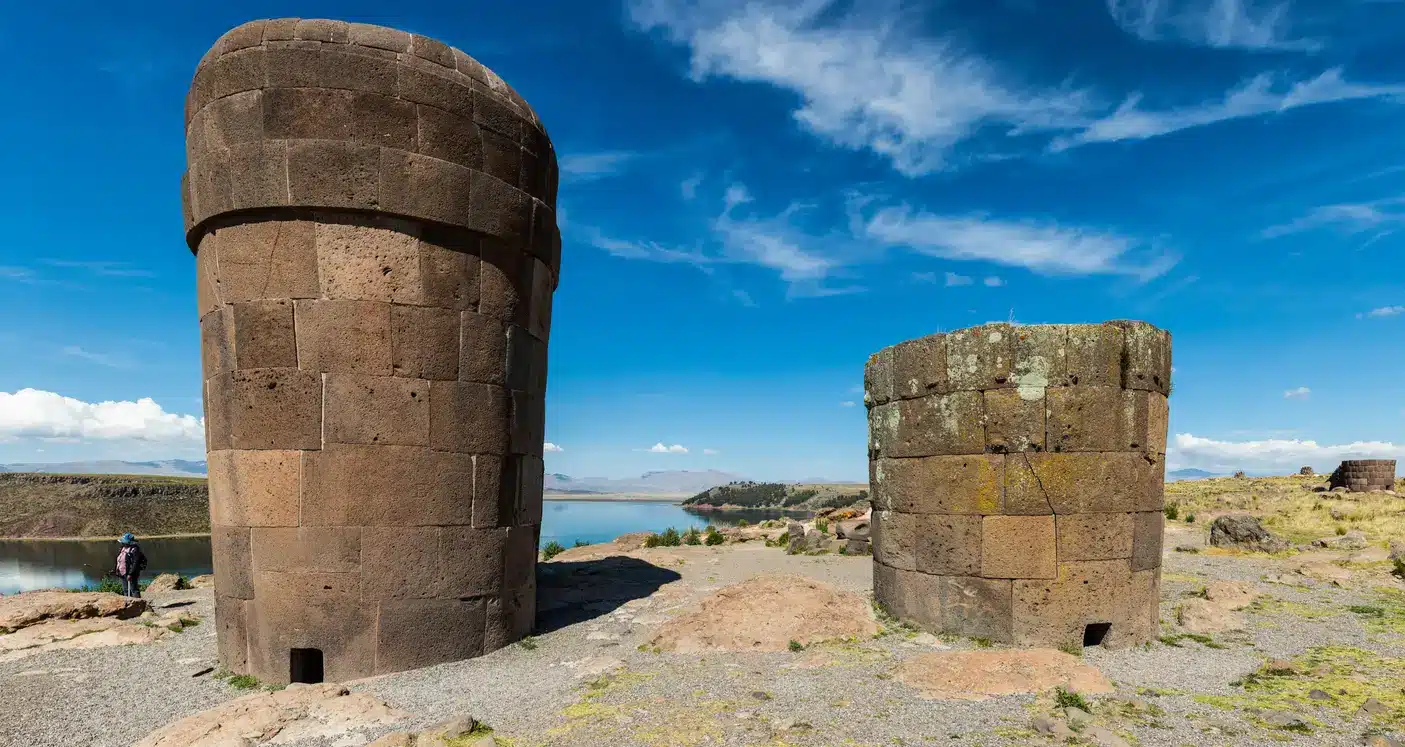
Visiting Sillustani Chullpas takes you to a peaceful and unique site near the city of Puno in southern Peru. Located on the edge of Lake Umayo, the site is famous for its tall stone towers called chullpas. These towers were built many years ago by the Colla people to serve as burial places for important members of their community. Today, they remain standing and attract travelers who want to explore history up close while enjoying the calm surroundings.
The towers stand out because they are different from most other ruins in Peru. Each tower has its own shape and size, and some reach impressive heights with stones carefully placed to last through time. As visitors walk through the site, they can observe the details of each tower while also appreciating the open space around them. The lake adds a sense of calm, and the hills in the distance create a wide, quiet landscape that encourages reflection.
In addition to the towers, Sillustani has many other features that give visitors a chance to connect with the past. Moving around the site, it becomes clear that the Colla people selected this location to honor their families and remain close to the land. You can see how the towers, the lake, and the surrounding hills combine to make this place meaningful. Observing these connections helps visitors understand the importance the site held hundreds of years ago.
Learning about why Sillustani was built allows visitors to better appreciate what they see. To start, it is useful to examine what Sillustani Chullpas are and why these towers have fascinated travelers for generations.
What will you find here?
- What Sillustani Chullpas Are and Why They Matter
- History of Sillustani Chullpas
- Why Sillustani Chullpas Is a Tourist Attraction
- How to Get to Sillustani Chullpas
- What to See and Do at Sillustani Chullpas
- Tips for Visiting Sillustani Chullpas
- Frequently Asked Questions
- Final Thoughts
What Sillustani Chullpas Are and Why They Matter
Sillustani Chullpas are ancient stone towers built by the Colla people, who lived in the highlands of Peru before the rise of the Inca Empire. These towers were created to hold the remains of important families and community leaders. Each tower is different in size and shape, and many have circular openings at the top. The Colla believed these openings allowed the spirit of the person inside to leave the tower.
When walking through the site, visitors often notice that the towers are made of large stones carefully fitted together without cement. Because of this careful construction, the towers have lasted for hundreds of years. Their shapes and heights vary, which gives the site a unique feel, almost like stepping into a small, ancient village.
Purpose of the Chullpas
The towers had specific roles in Colla society, showing how culture, status, and belief were closely connected:
- They protected the bodies of important leaders and families.
- They marked social status, indicating which families held power.
- They served as spiritual symbols, linking the living community with their ancestors.
By seeing the towers up close, visitors can begin to understand how the Colla honored their families and how closely they connected their lives to the surrounding land.
Why Sillustani Chullpas Matter Today
Beyond their age, the towers hold meaning for people today because they reveal important aspects of history and culture:
- Historical value: The towers give insights into life before the Inca Empire.
- Architectural interest: The careful stonework shows advanced building skills for that era.
- Cultural significance: The site shares the traditions and beliefs of the Colla people.
- Tourist attraction: The peaceful setting on Lake Umayo makes the site visually striking and memorable.
By seeing the towers in their natural surroundings, visitors can appreciate how the Colla built lasting structures while respecting the land.
Connecting the Past and Present
Learning what Sillustani Chullpas are makes a visit more meaningful. The towers are not just stones; they tell stories about families, beliefs, and daily life long ago. By paying attention to these details, visitors can feel a connection between the past and present.
History of Sillustani Chullpas
The chullpas at Sillustani were built by the Colla people, who lived in the highlands of Peru before the Inca Empire became powerful. They were skilled builders and leaders in their communities, constructing the tall, round stone tombs to honor important members of society. Leaders, called kurakas, often had the largest and most carefully built chullpas.
Most chullpas were constructed between the 11th and 15th centuries, making them more than 500 years old. Later, when the Inca Empire expanded into the region, the Incas respected these tombs and sometimes made small additions to the site. The size, shape, and careful construction of the chullpas show that the Colla highly valued their ancestors and leaders.
The Colla People and Their Traditions
The Colla were a highland society that valued family, ancestry, and a connection to the land. For them, chullpas were more than tombs—they were a way to honor their ancestors. Each tower reflected the status of the family it belonged to, with taller and more decorated towers reserved for leaders and nobles.
The towers were carefully built using large stones fitted together without cement, showing the advanced techniques of the time. Many towers have circular openings at the top, which the Colla believed allowed the spirit of the deceased to leave the tomb. These features show how the Colla combined practical construction with spiritual beliefs.
How Were the Chullpas Built?
Building a chullpa required planning and skill. The stones were very large, and each was shaped to fit precisely with the others. Builders did not use cement; instead, they used dry-stone masonry, where the weight and shape of the stones keep the structure together. Small openings at the top were used to place bodies and offerings inside. This careful design has helped the chullpas survive for hundreds of years.
Who Was Buried in the Chullpas?
The Colla placed their dead inside the chullpas in a sitting position and added pottery, textiles, and food to assist the spirits in the afterlife. The largest tombs were for leaders and nobles, while smaller tombs were for ordinary community members. This shows how the size of a chullpa reflected the social importance of the person buried there.
Inca Influence
Later, the Inca Empire extended into the region. While the Colla became part of the Inca realm, the towers remained culturally important. The Inca sometimes maintained or added to the chullpas, showing that the site continued to hold spiritual and cultural significance even as political control changed.
Why Sillustani Was Special
Sillustani was chosen for both practical and spiritual reasons. The tombs sit on a hill overlooking Lake Umayo, giving a wide view of the surrounding land. Ancient people believed that high places and water were connected to the spirits of the dead. By building chullpas here, the Colla honored their ancestors and created monuments visible from far away.
Today, Sillustani is protected as a historical site. Archaeologists study the tombs to learn more about the Colla and their building methods. Visitors can walk among the stone towers and observe the ancient construction up close. Exploring Sillustani helps people understand the Colla culture, their respect for leaders, and the care they used to build lasting monuments.
Why Sillustani Chullpas Is a Tourist Attraction
Sillustani Chullpas attract visitors for several reasons. The site offers a mix of history, nature, and quiet space, making it appealing to many types of travelers. Instead of feeling crowded or rushed, visitors can explore at their own pace while learning something new. The points below explain why this place continues to be a popular stop near Puno.
A Peaceful and Scenic Location
One of the main reasons people visit Sillustani is its setting. The stone towers stand beside Lake Umayo, surrounded by open land and hills. This creates a calm environment where visitors can enjoy wide views and fresh air. Many travelers especially value this peaceful setting after spending time in busy cities.
Easy to Explore for All Ages
Sillustani is easy to walk through, with clear paths and gentle slopes. Visitors do not need special equipment or strong hiking skills. Because of this, families, older travelers, and first-time visitors can enjoy the site comfortably. The open layout allows people to stop, rest, and explore at their own pace.
A Place to Learn Through Observation
Instead of relying on long signs or displays, visitors learn by seeing the towers up close. Observing how the stones fit together and how the towers are arranged in the landscape helps visitors understand their importance. Local guides often explain the site in clear and simple ways, making the experience easy to follow and enjoyable.
Popular for Photos and Quiet Moments
Many visitors come to Sillustani to take photos or enjoy a peaceful time outdoors. The towers, lake, and sky often create beautiful scenes, especially in the early morning or late afternoon. Because the area is open and calm, it is a good place to slow down and enjoy the surroundings.
Now that you understand why Sillustani Chullpas is worth visiting, learning how to get there will help you plan your trip more easily.
How to Get to Sillustani Chullpas
Before exploring the tall stone towers of Sillustani, you need to know how to reach this special place. Since Sillustani sits on a hill above Lake Umayo in the Peruvian highlands, it is not located inside a big city. It is about 34 kilometers north of Puno, a city on the shores of Lake Titicaca. Because of this, visiting Sillustani requires a little planning, but the trip is not difficult once you know your options. In fact, many travelers visit Sillustani as a short half-day trip from Puno, which makes it both convenient and enjoyable.
Starting Your Journey in Puno
Most visitors begin in Puno, as it is the closest major city. Puno has hotels, restaurants, and bus connections, making it the main starting point. Once you arrive in Puno, you are already more than halfway to the chullpas. From there, you can choose the transportation method that works best for you.
1. Taking a Local Bus or Colectivo
One affordable way to get there is by taking a small local bus or shared van, often called a colectivo. These vehicles usually leave from areas near the center of Puno. You would ask to be dropped off near the Sillustani junction or the village of Atuncolla.
After getting off, you may need to walk a short distance uphill to reach the entrance of the archaeological site. While this option may take a little longer because you share the ride with other passengers, it is practical for students or travelers on a budget.
2. Going by Taxi
If you prefer something simpler, a taxi from Puno is a direct and comfortable option. The driver takes you straight to the entrance of Sillustani without extra stops. Since the ride takes less than an hour, many visitors choose this method for convenience.
In addition, taxis allow you to arrange a return time with the driver. This can make the visit less stressful because you already know how you will get back to Puno.
3. Joining a Guided Tour
Another popular option is joining a guided tour from Puno. Many travel agencies offer half-day tours that include transportation and a guide who explains the history of the chullpas.
This option is especially helpful for young learners or first-time visitors. It removes transportation worries and provides a clearer understanding of the site. Guides often share details about the Colla people, the construction of the towers, and the importance of Lake Umayo.
Coming from Other Cities
If you are traveling from another part of Peru, you will first need to reach Puno. For example, many travelers come from Cusco by long-distance bus. This journey usually takes about 6 to 8 hours by road.
Another possibility is flying into Juliaca, which has the nearest airport to Puno. From Juliaca, you can take a taxi or bus to Puno, which takes about an hour. After arriving in Puno, you then continue to Sillustani using one of the local options mentioned earlier.
Arriving at the Site
Once you reach the entrance area, you will purchase a ticket before walking up toward the chullpas. The path leads you onto a hill where you can see both the stone towers and Lake Umayo below. At that moment, the effort of traveling there begins to feel worthwhile.
Although Sillustani is not in a busy city, it is easily accessible with some preparation. By starting in Puno and choosing the right transport option, visitors of all ages can comfortably reach this historic site and begin exploring its ancient towers.
What to See and Do at Sillustani Chullpas
When you arrive at Sillustani, you may first notice the quiet surroundings and the wide open view of the highlands. The site is not crowded with tall buildings or busy streets. Instead, it feels calm and spacious, which makes it easier to focus on the ancient stone towers standing on the hill. Because of this peaceful setting, visiting Sillustani is not only about seeing old structures. It is also about understanding how people long ago honored their leaders and chose meaningful places for burial.
As you walk through the site, there are several important things to see and activities to enjoy. Each one helps you understand the history and culture of the Colla people and later the Inca.
Explore the Chullpas (Burial Towers)
The main attraction at Sillustani is the chullpas, which are tall, round stone burial towers. Some are small and simple, while others are much taller and carefully built with large, smooth stones.
As you move closer, you can see how the stones were shaped to fit tightly together without cement. This building technique helped the towers stand for centuries. In addition, you may notice that many chullpas have small openings facing east. Historians believe this direction was important because it faces the rising sun.
Walking among these towers allows you to compare their sizes and styles. Some were built by the Colla people, while others show Inca influence. By observing these differences, you begin to see how cultures changed over time.
Learn About the Colla and Inca History
While exploring, take time to learn about the people who built and used the chullpas. The Colla constructed most of the towers between the 11th and 15th centuries. Later, when the Inca expanded into the region, they respected the site and even built their own chullpas there.
If you join a guided tour, the guide can explain how the burial process worked and why leaders were placed in a sitting position with offerings. Even without a guide, reading the informational signs at the site can help you understand the traditions connected to these towers.
Learning the history makes the visit more meaningful because you begin to see the chullpas not just as stone buildings, but as part of a community’s beliefs and values.
Enjoy the View of Lake Umayo
Just below the hill lies Lake Umayo, which surrounds much of the Sillustani peninsula. From the top of the site, you can see the blue water stretching across the landscape.
The location was not chosen by accident. Ancient people often selected high places near water for spiritual reasons. As you look across the lake, it becomes easier to understand why this area felt important to them.
Taking a few quiet moments to observe the scenery also gives you time to appreciate how natural beauty and history exist together in one place.
Observe the Stone Carvings and Details
Besides the large towers, there are smaller details worth noticing. Some chullpas have carved stones with simple animal shapes, such as lizards. These carvings may have had symbolic meaning.
You can also study how the construction styles differ. Certain towers are wider at the top than at the base, which is unusual compared to modern buildings. Paying attention to these features helps you recognize the creativity and engineering skills of ancient builders.
Take Photographs and Walk the Trails
Because the site sits on a hill, it offers excellent viewpoints for photographs. You can capture images of the chullpas with the lake in the background. Early morning and late afternoon often provide softer light, which makes the scenery clearer and more detailed.
There are also simple walking paths around the site. As you follow them, you can explore different angles of the towers and enjoy the open air. The walk is not very long, but it allows you to move at your own pace.
Visit the Small On-Site Museum
Before walking up to the hill of towers, many visitors stop at the small museum near the entrance of Sillustani. Although it is not very large, it displays artifacts discovered in the area, including pottery, tools, and burial objects connected to the Colla culture. These items help explain how people lived in the highlands and how the chullpas were used.
As you look at the objects, you begin to understand that the towers were part of a larger cultural system. The museum also provides simple explanations about burial practices and construction techniques. Because of this, visiting the museum first can make the walk among the towers more meaningful and easier to understand.
Visiting Sillustani Chullpas is more than just seeing ancient tombs. As you explore the towers, learn about the Colla and Inca cultures, and look out over Lake Umayo, you begin to understand why this place was chosen for burial centuries ago. Each part of the visit connects history, architecture, and nature in a clear and meaningful way.
By the time you leave the hill, you will likely see Sillustani not only as an archaeological site, but also as a reminder of how past societies honored their leaders and carefully built structures meant to last.
Tips for Visiting Sillustani Chullpas
Visiting the Sillustani Chullpas is an exciting way to learn about ancient Andean history while enjoying beautiful views of Lake Umayo. Since the site sits high in the Andes near Puno, the experience can feel very different from visiting a city museum. For this reason, preparing ahead of time will help you stay comfortable, safe, and ready to explore.
With that in mind, here are some helpful tips to make your visit both fun and safe.
Take time to adjust to the altitude
Because Sillustani is over 3,800 meters above sea level, the air is thinner than in many other places. As a result, you may feel tired more quickly. It helps to spend a day in Puno first, drink plenty of water, and walk slowly while exploring the site.
Wear comfortable walking shoes
The ground around the chullpas is uneven and sometimes rocky. For this reason, sturdy shoes with good grip will make it easier to move around safely.
Bring layers of clothing
The weather can change during the day. In the morning it may feel cold, yet by midday the sun can be strong. Wearing layers allows you to adjust easily and stay comfortable.
Protect yourself from the sun
Since the site is at high altitude, sunlight can feel stronger than usual. Applying sunscreen, wearing a hat, and bringing sunglasses will help protect your skin and eyes.
Carry water and light snacks
Exploring the towers involves walking across open land. Therefore, bringing water keeps you hydrated, and a small snack can help maintain your energy.
Respect the archaeological site
Although the chullpas are impressive stone towers, they are also ancient burial structures. Avoid climbing on them or touching delicate stonework. By being careful, you help preserve the site for future visitors.
Consider visiting with a local guide
A guide can explain the history of the Colla people and the later influence of the Inca Empire. This added knowledge makes the visit more meaningful and easier to understand.
In the end, a visit to Sillustani is not only about seeing tall stone towers. It is also about understanding the people who built them and appreciating the peaceful setting beside Lake Umayo. With a little preparation and care, your trip can be both educational and enjoyable.
Frequently Asked Questions
This FAQ section provides quick and helpful answers to questions people often ask about the Sillustani Chullpas and what to expect when visiting the site.
Where is Sillustani located within the Titicaca region?
Sillustani is located in southern Peru near Lake Umayo, about 34 kilometers from Puno. It sits high in the Andes at more than 3,800 meters above sea level. This location is part of the Titicaca region, which is known for its lakes, mountains, and rich cultural history.
Who were the Colla people, and what role did they play in building Sillustani?
The Colla people were an Aymara-speaking group who lived in the Andes before the Inca Empire. They built the first chullpas at Sillustani to serve as burial towers for important community members. Later, when the Inca incorporated the region into their empire, they added their own architectural style to the site.
What are the Sillustani tombs and who built them?
The Sillustani tombs are tall stone towers built to hold the remains of noble and respected people. The earliest tombs were built by the Colla people, and later the Inca Empire continued using and expanding them. These tombs are also called chullpas and are an important part of Andean history.
Why is Sillustani considered an important site in Peruvian cultural heritage?
Sillustani is important because it preserves ancient burial traditions from both the Colla people and the Inca Empire. It helps historians and visitors understand Andean culture, architecture, and spiritual beliefs. Today, it is recognized as a key archaeological and tourist site in Peru.
Why are the chullpas described as stone burial tombs?
Chullpas are called stone burial tombs because they are made from carefully cut stones stacked to form towers. The stone walls protected the bodies and belongings placed inside for centuries. Their durability is one reason they are still standing today.
How were the funeral towers at Sillustani constructed and used?
The funeral towers were built using large stones fitted together without mortar, forming circular or rectangular towers. Inside, the dead were placed in seated positions along with food, clothing, and personal items. Families and communities used the towers to honor their ancestors and leaders.
Why was Lake Umayo chosen as the setting for this ancient burial ground?
Lake Umayo provided a peaceful and elevated location for the chullpas. In Andean culture, lakes and mountains were considered sacred, so building tombs there showed respect for nature and the dead. The elevated peninsula setting also made the towers highly visible across the landscape.
How do the chullpas reflect the veneration of the dead in ancient Andean culture?
The chullpas show respect for the dead through their size, placement, and careful construction. Only important leaders and nobles were buried in these towers, showing their high status. The inclusion of offerings and careful wrapping of the bodies reflects the belief in honoring ancestors after death.
What are mummy bundles, and how were they placed inside the towers?
Mummy bundles were the bodies of the dead wrapped in textiles and placed in a seated position inside the chullpas. They were often accompanied by food, clothing, and tools for use in the afterlife. This method helped preserve the remains and showed cultural and spiritual care.
What makes the chullpa architecture at Sillustani unique compared to other Andean sites?
Sillustani chullpas are unique because many have a wider top than bottom, which is uncommon elsewhere. The stonework is very precise, especially in the Inca-built towers, fitting large stones together without mortar. This style combines Colla and Inca architectural traditions, creating a distinct appearance.
How is Sillustani different from Machu Picchu?
Sillustani is mainly a burial site with towers for the dead, while Machu Picchu was a city and ceremonial center for the living. Machu Picchu is located in the Urubamba Valley, much lower in elevation than Sillustani. Both sites show Inca stonework, but their purposes were very different.
Can you visit Sillustani and Rainbow Mountain on the same trip, and what makes each site unique?
Yes, it is possible to visit both sites on the same trip, but they are in different regions of Peru. Sillustani offers ancient burial towers and a cultural experience near Lake Umayo. Rainbow Mountain is famous for its colorful mountains and high-altitude hiking experience near Cusco, several hours from Puno by road.
How long does a typical tour from Puno to Sillustani take?
A typical tour from Puno to Sillustani takes about 2 to 4 hours, depending on stops and the pace of walking around the site. Most tours include transportation, a guide, and time to enjoy views of Lake Umayo. Visitors usually spend around one to two hours exploring the chullpas themselves.
Final Thoughts
Visiting Sillustani Chullpas is more than adding another landmark to your Peru itinerary. It is an opportunity to stand in a place where history, landscape, and belief come together in a powerful way. High above Lake Umayo, the ancient burial towers remind visitors that long before modern cities and roads, Andean societies were building monuments that reflected deep respect for their ancestors and a strong connection to nature. The quiet atmosphere allows you to absorb this history without distraction.
What makes Sillustani especially meaningful is its balance. It is historically important yet not overwhelming, impressive yet peaceful. You can walk among the chullpas at your own pace, observe the fine stonework up close, and reflect on the traditions of the Colla and later the Inca. The open highland scenery adds to the experience, creating a visit that feels both educational and reflective.
As you plan your time in southern Peru, Sillustani offers a chance to explore a lesser-known but deeply significant archaeological site. With a bit of preparation and curiosity, your visit can become more than a sightseeing stop—it can be a moment of connection with Peru’s ancient past. Whether you are interested in history, architecture, photography, or simply quiet landscapes, Sillustani Chullpas leaves a lasting impression long after you leave the hill overlooking the lake.
Visiting Sillustani can also be part of a broader journey through Peru’s incredible cultural sites. Travelers often continue to destinations like Machu Picchu, taking the scenic Inca Rail train for a comfortable ride that highlights the country’s mountains and valleys. Planning your trip to include multiple sites allows you to experience both the serene highlands of Puno and the iconic wonders of the Inca Empire. Booking train tickets in advance ensures a smooth and memorable adventure that combines history, culture, and stunning landscapes.


