
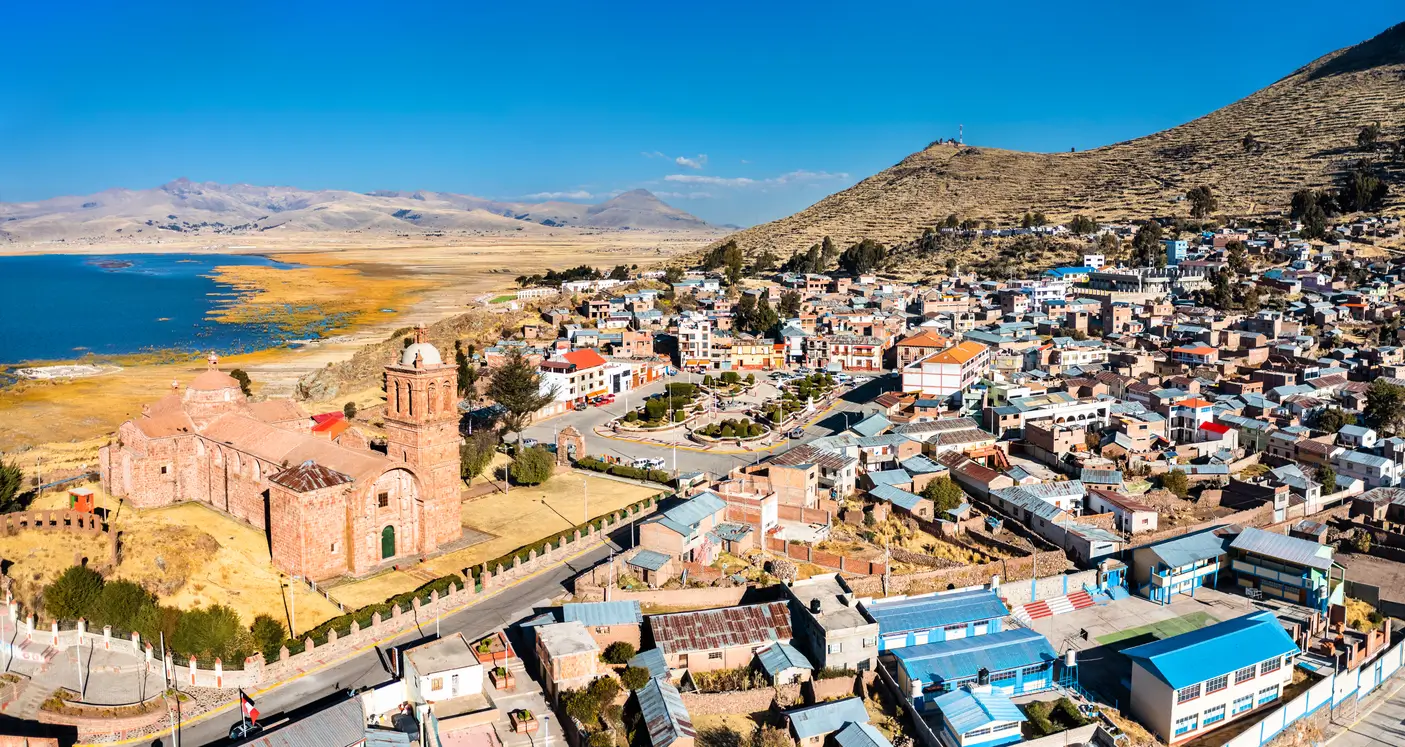
Visiting Pomata Puno: The Colonial Andean Town That Showcases History, Culture, and Festivals
Pomata Puno is a small town in southern Peru, close to Lake Titicaca, one of the highest large lakes in the world, which people can travel on by boat. The town is known for its Church of Santiago Apóstol, a colonial-era building made of reddish stone with detailed carvings. Its design shows a mix of Andean and Spanish styles, making it a special place to visit.
The people of Pomata Puno continue to celebrate their traditions. One of the most famous events is the Roscasiri festival, held each year on January 1. During this celebration, locals perform music and dance, and they make bread offerings that pay tribute to their Aymara heritage.
Visitors to Pomata Puno can enjoy more than just history and festivals. The town offers colorful markets, quiet streets, and beautiful views of the lake and surrounding mountains. Even though it is smaller and less crowded than nearby cities, it gives travelers a chance to experience life in the Andes.
With its mix of history, culture, and natural charm, Pomata Puno is a town that welcomes visitors to explore, learn, and enjoy its unique traditions.
What will you find here?
- Finding Pomata Puno: Location and Highlights
- Historical Significance of Pomata Puno
- Festivals and Cultural Events in Pomata Puno
- Daily Life, Markets, and Traditions in Pomata Puno
- Architecture and Landmarks in Pomata Puno
- Pomata as a Gateway to Lake Titicaca
- Travel Tips for Visiting Pomata Puno
- Frequently Asked Questions
- Final Thoughts
Finding Pomata Puno: Location and Highlights
Pomata Puno is the capital of the Pomata District in Chucuito Province. The area has a long history of Aymara culture, and as you explore the town, you can see how local people continue many of their traditions today. The town is set on the high Altiplano, giving visitors wide views of the surrounding plains, distant mountains, and parts of Lake Titicaca.
From this elevation, more than 3,800 meters above sea level, you can get a clear sense of the high Andes and the open landscapes that have influenced life in the region for centuries. The natural scenery around the town changes as you move through its quiet streets, farmland, and small neighborhoods, showing the calm rhythm of life in the highlands.
If you want to travel from Puno City to Pomata Puno, the road distance is about 105 kilometers. The main route follows the paved highway toward Desaguadero, which continues to the border with Bolivia. Along the way, you will pass wide plains, small villages, farms, and stretches of open grassland. The journey alone gives you a first look at the landscapes and daily life of the southern highlands.
If you want to visit Pomata Puno, you can take a bus or shared van from Puno or nearby Juliaca, or you can drive a private car. The trip usually takes a few hours, and as you travel, you will notice lakes, fields, and small towns along the way. Seeing the region gradually helps you appreciate the natural beauty, history, and traditions of the Andes even before you arrive in town.
Historical Significance of Pomata Puno
Pomata has a long history that helps explain why the town is important in the southern Andes today. Over time, it developed as a place where local traditions and Spanish colonial impact came together. This shared history can still be seen in the town’s buildings, religious life, and community celebrations.
Colonial Roots and Early Development
Pomata became an important settlement during the Spanish colonial period, especially in the 17th century. Its location near Lake Titicaca made it a useful place for missionaries and colonial authorities who were organizing towns and spreading Catholic teaching in the region. Rather than being founded as a new city, Pomata grew around existing indigenous communities and colonial religious centers.
Religious and Local Administration
During the colonial era, Pomata played a strong religious role in the area. Churches were not only places of worship but also spaces where people gathered for learning, meetings, and community decisions. Because of this, religious buildings became central to daily life and helped shape how the town was organized.
Cultural Fusion
The people of Pomata are mainly Aymara, and they have continued many of their customs over time. While Catholic practices were introduced during the colonial period, local traditions were not replaced. Instead, they blended together. This mix can still be seen today in festivals, music, dance, and religious events that include both indigenous and Catholic elements.
Connection to Lake Titicaca
Pomata’s history is closely linked to the wider Lake Titicaca region, an area known for its long pre-Columbian past and later colonial influence. The lake supported trade, farming, and daily life for centuries, and towns like Pomata developed alongside it. Visiting Pomata helps you understand how Andean communities have lived and adapted over time through strong ties to land, water, and shared traditions.
Festivals and Cultural Events in Pomata Puno
Festivals play an important role in daily life in Pomata Puno. Throughout the year, these events bring together faith, tradition, and community. Music, dance, and shared meals help tell the story of the town’s Aymara roots and its long Catholic history. Taking part in these celebrations is one of the best ways to understand local life.
Corpus Christi and Patron Saint Celebrations
One of the major religious events in Pomata Puno is Corpus Christi, which is usually celebrated in June. During this time, the town holds religious processions along with traditional Andean dances performed in public spaces. Another key event is the Feast of Santiago Apóstol, the town’s patron saint, celebrated in July. On this occasion, the church becomes the center of activity as locals carry sacred images through the streets, accompanied by music and group prayers.
Roscasiri
Roscasiri is one of the most distinctive traditions in Pomata Puno. Also known as the Festival of Bread, it is celebrated every year on January 1. During this event, families place large, decorated breads on newly appointed community leaders. These breads represent wishes for abundance, responsibility, and a successful agricultural year.
The celebration commonly begins with a Catholic Mass, followed by a procession through the town. During the procession, community members offer bread to local authorities as a sign of respect and hope for the year ahead. This tradition represents both religious belief and long-standing local customs.
Traditional Music and Dance
Music and dance are essential parts of Pomata’s festivals. Brass bands, panpipes, and other traditional instruments provide rhythm for dance groups wearing bright and carefully prepared costumes. Many dances honor saints, local history, or shared beliefs, helping pass traditions from one generation to the next.
Community Participation
These festivals involve the whole town. Local families, returning residents, and visitors all take part, creating a strong bond of unity. Because of this shared spirit, festival days are some of the best times to see Pomata’s welcoming and community-centered way of life.
Experiencing Local Culture During Festivals
Festivals in Pomata Puno offer more than scheduled events. They give you a chance to see how people live, celebrate, and connect with one another. By watching closely and taking part respectfully, you can more fully understand the town’s traditions, values, and everyday culture.
Dance and Music
You can gather in the main plaza to watch traditional dances or, in some cases, join in with guidance from locals. Live Andean music fills the space and creates an atmosphere that is lively but family-friendly.
Local Food
Festival days are also a good time to try local dishes. You may find chairo soup, roasted corn, or fried trout from Lake Titicaca, often prepared by local vendors. These foods are part of daily life and special occasions in the region.
Photography Etiquette
If you want to take photos, always ask for permission first, especially during ceremonies or when photographing people. Showing respect helps create positive interactions and allows cultural traditions to be shared properly.
Together, these festivals reflect how traditions remain an active part of life in Pomata Puno. Shared celebrations, music, and religious practices help keep cultural customs strong from generation to generation. For visitors, these times offer a meaningful way to learn about the town while showing respect for its people and traditions.
Daily Life, Markets, and Traditions in Pomata Puno
Daily life in Pomata Puno shows strong Aymara influence and long-standing traditions shaped by the land and Lake Titicaca. Many residents speak Aymara as their first language, and everyday activities are closely connected to farming, weaving, and local crafts. These practices are part of family life and have been passed down over many generations.
Agriculture and Andean Living
Located at more than 3,800 meters above sea level, Pomata sits on the high Andean plateau near the Lake Titicaca basin. Local farmers grow potatoes, quinoa, oca, broad beans, and barley, which are well-suited to the cold climate. Small-scale farming is common, and families often work nearby fields rather than large farms.
Llamas and alpacas are raised in the surrounding plains, providing wool for weaving and meat for local use. Farming activities often follow the Andean agricultural calendar, and some families continue to observe traditional customs connected to Pachamama, or Mother Earth, especially during planting and harvest times.
Artisan Crafts and Textiles
Handcrafted crafts are an important part of life in Pomata and nearby towns in Chucuito Province. Artisans produce woven textiles, embroidery, and simple ceramics, which show both ancient Andean designs and later colonial impact. Many women use backstrap looms to weave shawls, belts, and ponchos with geometric patterns and bright colors.
Pottery made in the area is usually practical and decorative, sometimes featuring designs inspired by Lake Titicaca and local animals. These items are often sold in local markets or during festivals, allowing artisans to share their work directly with the community and visitors.
Markets and Community Life
On market days, the town plaza becomes a busy meeting place. Farmers and artisans from nearby communities, including Juli and Zepita, arrive early to sell produce, textiles, and household goods. Conversations take place in both Aymara and Spanish, creating a friendly and familiar atmosphere.
Compared to the large markets in Puno City, Pomata’s market is smaller and quieter, but it plays an important role in daily life. It is a place where people exchange goods, news, and support, showing how community ties remain strong.
Traditional Foods and Local Flavors
Local food in Pomata Puno is based on simple ingredients from the land and lake. Common dishes include fried trout from Lake Titicaca, chairo soup made with meat, potatoes, and grains, and chuño colada, a warm drink prepared from freeze-dried potatoes.
Herbal teas such as coca leaf tea and muña are widely consumed, especially during cold mornings. During festivals like Roscasiri, families also prepare sweet breads, roasted corn, and fresh Andean cheese, which are often shared with neighbors and guests.
A Community Built on Tradition
What makes Pomata Puno special is how tradition remains part of everyday life. Markets are not only places to buy and sell goods but also spaces where people connect, talk, and preserve social ties. Visitors are usually welcomed with warmth and friendliness, and daily moments can offer insight into local culture.
By visiting markets, sharing meals, or watching artisans at work, you can better understand life in Pomata Puno. The town keeps balancing its colonial past with living Andean traditions, showing how culture can remain active and meaningful in daily life.
Architecture and Landmarks in Pomata Puno
Aside from its daily life and local markets, Pomata Puno is also known for its well-preserved architecture. The town’s buildings reflect its long colonial history and strong Andean influence, showing how Spanish design was adapted using local materials and skills. Because Pomata sits on elevated land near Lake Titicaca, many of its historic structures are framed by open views of the lake and surrounding highlands.
Here are some of the key architectural landmarks you can explore as you walk through town:
The Church of Santiago Apóstol
The most important landmark in Pomata Puno is the Church of Santiago Apóstol. Built during the colonial period in the 17th century, the church is considered one of the finest examples of mestizo colonial architecture in southern Peru. It was constructed from reddish stone, and its carved facade combines Catholic religious symbols with Andean decorative elements, showing the cultural blending of the time.
The church has been officially recognized as part of Peru’s Cultural Heritage, and it is often included in routes that feature historic religious architecture in the Puno region. Its detailed stonework continues to draw attention from visitors and scholars alike.
Inside, the church contains ornate altarpieces, carved wooden elements, and religious paintings linked to artistic traditions influenced by the Cusco School. The structure follows a single-nave layout, typical of colonial churches, while the decorative details reflect the work of local Andean artisans who helped shape the building.
Colonial Streets and Traditional Homes
Beyond the church, Pomata’s streets and homes preserve a strong colonial character. Many houses are built with stone, adobe, and brick, materials suited to the highland climate. Wooden balconies, stone doorways, and interior courtyards show Spanish influence adapted to local needs and resources.
As you walk through the town, the mix of building styles reflects different moments in Pomata’s past, from early colonial times to later periods. This setting helps visitors understand how history remains visible in everyday spaces.
Main Plaza and Town Hall
At the center of town is the Plaza Mayor, which continues to serve as Pomata’s main gathering place. Markets, festivals, and daily social life take place here, surrounded by traditional buildings and views of the nearby landscape.
The municipal building, also known as the Casa Municipal, reflects later architectural styles introduced during the republican period, with simple arches and stone details. From the plaza, the bell towers of the Church of Santiago Apóstol rise above the rooftops, strengthening the church’s central role in the town.
Other Historical Structures
Smaller chapels, family homes, and religious shrines can be found throughout Pomata. Many date to the 18th and 19th centuries and were built using local stone and wood. Some of these structures are still used during religious processions and community celebrations, linking architecture with living traditions.
Together, these buildings help explain how Pomata Puno developed over time. From churches to homes and public spaces, the town’s architecture shows how colonial influence and Aymara identity continue to exist side by side.
This strong connection between buildings, history, and daily life prepares visitors to better appreciate the cultural traditions and festivals that continue shaping Pomata today.
Pomata as a Gateway to Lake Titicaca
Pomata Puno’s location makes it a convenient and interesting base for exploring the Lake Titicaca region. Sitting on the southwestern shore of the lake and at a high Andean elevation, the town offers easy access to nearby islands, scenic views, and cultural experiences that are less crowded than those from Puno City. Because it is quieter and smaller, Pomata allows visitors to experience daily Andean life while being close to major attractions.
Nearby Islands
From the nearby Lake Titicaca ports, travelers can visit islands such as Taquile and Amantani, both well-known for their handwoven textiles and traditional homestays. Staying or passing through Pomata allows visitors to plan trips to these islands while enjoying a quieter town as a base, rather than staying in the busier city of Puno.
Combining Tours and Side Trips
Many visitors use Pomata as part of combined itineraries. It is easy to join boat tours on Lake Titicaca, explore surrounding highland villages, or visit nearby towns such as Lampa and Juliaca. This flexibility makes Pomata ideal for travelers who want a mix of cultural experiences, historic exploration, and scenic views without being far from essential services or transport connections.
Regional Exploration and History
The region around Pomata is rich in history and tradition. Its location allows visitors to explore archaeological sites, colonial towns, and the ceremonial center of Sillustani, which is famous for its ancient funerary towers. Pomata’s proximity to these sites, combined with its own colonial heritage and living Aymara culture, makes it a strong starting point for understanding the broader Lake Titicaca region.
In short, Pomata Puno works as a gateway because it balances accessibility with authenticity. Visitors can use it to reach the major islands and historical sites while enjoying the tranquil streets, traditional markets, and cultural richness of a smaller Andean town.
Travel Tips for Visiting Pomata Puno
Getting to Pomata Puno is easier than you might think, but planning ahead will make your visit smoother and more enjoyable. The town is accessible by road from nearby cities, and knowing your options can help you make the most of your time in this charming Andean community.
Here are some helpful tips for you:
Travel by Bus or Colectivo: You can take regular buses or shared vans (colectivos) from Puno City or Juliaca. The ride usually takes about 2 to 3 hours, depending on traffic and road conditions. These options are affordable and let you experience local travel alongside residents.
Private Car or Taxi: If you want more flexibility, you can hire a private car or taxi, which allows you to stop at scenic viewpoints, small villages, or highland landmarks along the way. This is a good option if you are traveling with a group or prefer a more comfortable and direct route.
Best Time to Travel: Roads in the highlands can be affected by rain, especially between December and March. You’ll usually have a safer and more scenic drive if you travel in the morning, giving you more daylight to settle in and explore the town when you arrive.
Ask Locals for Directions: Once you are in Pomata, you can ask locals for directions to landmarks like the Church of Santiago Apóstol, Plaza Mayor, or weekend markets. Many residents speak Aymara and Spanish, and they are generally happy to guide visitors like you.
Plan Your Time in Town: Because Pomata is smaller than Puno City, you can see the main sights, enjoy the market, and even join a festival without feeling rushed. Spending at least a day or two here allows you to appreciate both the colonial architecture and the daily life of the Aymara community.
Prepare for the Altitude: Pomata sits around 3,860 meters above sea level, so it’s important that you drink water, move slowly, and take it easy on your first day. Proper rest will help you enjoy your visit fully.
Frequently Asked Questions
This section provides answers to the most frequently asked questions about Pomata Puno, offering useful information to help guide your visit and make your experience more enjoyable.
What should I know before visiting Pomata for the first time?
Before visiting Pomata, prepare for a high-altitude experience as it is located near Lake Titicaca in Peru. The town is known for its stunning views and rich history, with the Church of Santiago Apóstol being a notable landmark. Be sure to acclimate properly to avoid altitude sickness and enjoy the scenic surroundings.
Is it easy to communicate in English in Pomata?
In Pomata, Spanish is the primary language spoken, and English is not widely used. It is advisable to learn some basic Spanish phrases to help with communication. Locals are often friendly and may try to assist despite language barriers.
Can I try traditional Peruvian dishes in Pomata?
Yes, Pomata offers the chance to try traditional Peruvian and regional dishes, though options may be simpler than in larger cities. Local eateries often serve high-altitude specialties such as trout from Lake Titicaca, chairo (Andean soup), quinoa dishes, and potatoes. Sampling local food is a great way to experience the culture and flavors of the Puno region.
Is there any traditional craft or artisan work in Pomata?
Pomata is part of the Puno region, which is well-known for its traditional crafts such as weaving, textiles, and pottery. While Pomata itself is a small town, visitors can find local markets or nearby communities where artisans sell handmade textiles, ceramics, and other crafts that reflect the region’s cultural heritage. Supporting these local products helps preserve traditional skills and connect with the local culture.
Can I use credit cards in Pomata, or is it cash only?
In Pomata, it’s advisable to carry cash as credit card acceptance may be limited. Local markets and smaller vendors are more likely to prefer Soles, the local currency. Ensure you have enough local currency for small purchases and transportation.
Is it safe to stay overnight in Pomata?
Pomata is generally a quiet and safe town for overnight stays. Accommodations are limited but adequate, with small hotels and guesthouses. As with any travel destination, standard precautions such as securing valuables and choosing reputable places to stay are recommended. Avoid isolated areas at night, but overall, visitors report feeling safe in the town.
What is the best time of year to visit Pomata?
The best time to visit Pomata is during the dry season, from May to September, when the weather is more stable, and conditions are ideal for exploring. During these months, the skies are clear, making for excellent photography and sightseeing. Travelers should still prepare for cooler temperatures, especially at night.
How long should I plan to stay in Pomata?
A visit to Pomata can comfortably fit into a one to two-day itinerary, allowing time to explore its main attractions and enjoy the local culture. If interested in deeper exploration or day trips to nearby Lake Titicaca, consider extending your stay to three days. This duration provides a balanced experience without feeling rushed.
Final Thoughts
Pomata may be small, but it holds a rich story of history, faith, and Andean culture. From the Church of Santiago Apóstol to its colonial streets and traditional homes, the town shows how Spanish influence and Aymara traditions came together to shape a unique way of life. Every corner of Pomata reflects centuries of architecture, art, and cultural continuity, making it a special destination in southern Peru.
When you visit, you’ll notice how daily life and festivals still follow rhythms shaped by the land and the lake. Markets, music, and celebrations bring the town together, allowing you to see living traditions up close. Spending a day or two in Pomata gives you the chance to connect with local people, learn about their customs, and observe how history and culture continue to guide daily life in this Andean community.
Visiting Pomata is more than sightseeing—it’s an opportunity to experience the authentic soul of the Andes. Here, history, tradition, and community are alive in the streets, plazas, and homes. By exploring its architecture, festivals, and local life, you can leave with a deeper understanding of a town where past and present meet, and where the spirit of the Andes continues to thrive.
If you want to see more of Peru after exploring Pomata Puno, a great way to continue your journey is by train. While Pomata itself is in the southern highlands near Lake Titicaca, you can travel to Cusco and then take the train to Machu Picchu, one of Peru’s most iconic sites. This makes Pomata a perfect starting point for experiencing both authentic Andean life and Peru’s world-famous attractions, allowing you to enjoy the quieter towns and local traditions before visiting the historic wonders farther north.
Take the Inca Rail train from Cusco to Machu Picchu and enjoy a comfortable, scenic journey to one of the most breathtaking destinations in the world. Book your ticket today!


