
Why Paucartambo Is One of Cusco’s Most Underrated Cultural Attractions for Travelers
When most travelers think about Peru, Machu Picchu and the Sacred Valley usually come to mind. These iconic sites are famous for good reason. But just a few hours from Cusco lies one of Peru’s best-kept secrets—and that’s part of what makes it so special. Paucartambo is an off-the-beaten-path Andean town with deep roots in tradition, history, and local identity. It’s easily one of the most underrated cultural destinations in the Cusco region.
Unlike the crowded tourist spots, Paucartambo offers something more personal. This is where culture isn’t just shown—it’s lived every day. From centuries-old festivals to daily rituals, the town gives travelers a real look into the heart of the Andes. You’ll walk through colonial streets, meet locals who carry on ancestral traditions, and witness celebrations that blend Indigenous beliefs with Catholic customs. It’s a place that stays with you.
Paucartambo might not be in every travel guide, but that’s exactly why it deserves a spot on your itinerary. In this guide, you’ll find the top reasons to visit, what to do while you’re there, and what cultural insights are worth knowing before you go. But before everything, let’s take a closer look at where Paucartambo is located and how to get there.
What will you find here?
- Where Is Paucartambo and How to Get There?
- Why is Paucartambo an Underrated Cultural Attraction?
- 5 Reasons That Make Paucartambo a Must-Visit Destination
- What to See and Do in Paucartambo
- Practical Paucartambo Travel Tips to Remember
- Where to Go Next After Paucartambo: Itinerary Ideas
- Frequently Asked Questions
- Final Thoughts: A Journey to the Heart of Paucartambo
Where Is Paucartambo and How to Get There?
Paucartambo is a charming town in Peru. It’s located in the Andes Mountains, about 110 kilometers east of Cusco. The town is known for its rich culture and traditions, especially its vibrant festivals.
So, how do you get to Paucartambo from Cusco? It’s pretty straightforward. First, you need to travel by road. The distance is around 110 kilometers. That might sound like a lot, but the journey is scenic. Depending on road conditions and traffic, it takes between three to four hours.
To start your journey, you can catch a bus from Cusco. Buses to Paucartambo leave from the Santiago bus terminal. They run frequently, especially in the morning. In addition, if you prefer more comfort, you can hire a taxi. It’s a bit pricier but faster and more direct. Some people also opt for organized tours, which include transportation and a guide.
The road to Paucartambo is paved most of the way. However, it can be winding and narrow in parts. If you’re not used to mountain driving, it’s better to have an experienced driver. The final stretch, especially as you descend into the town, can be particularly curvy and foggy during certain seasons. On the way, you’ll see stunning landscapes, traditional villages, and maybe some llamas!
When you arrive in Paucartambo, you’ll find it’s a delightful place. There are colonial buildings, and the people are friendly. It’s a perfect spot to experience Andean culture.
In summary, getting to Paucartambo from Cusco is quite easy. Whether you take a bus, a taxi, or a tour, the trip is enjoyable. And once you’re there, you’ll find a warm welcome and lots to see.
Why is Paucartambo an Underrated Cultural Attraction?
Paucartambo often gets overlooked. When people plan a trip to Peru, they usually go straight to places like Machu Picchu or Cusco. These spots are famous, and they deserve the attention. But because of that, smaller towns packed with history and culture are often left off the itinerary.
That’s where Paucartambo comes in. It’s not just another stop—it’s a town that still holds on to its traditions. You’ll notice the difference right away. The architecture, the daily life, the way people connect to their roots—it all feels real and untouched by mass tourism.
In a way, the fact that it’s underrated makes it even more interesting.
So, why should you consider adding it to your Peru itinerary? Below are the reasons that make Paucartambo a must-visit cultural destination.
5 Reasons That Make Paucartambo a Must-Visit Destination
Some places stay with you long after you leave. Paucartambo is one of them. It’s not flashy or filled with big attractions, but it offers something that’s getting harder to find—authenticity.
What makes it even better? You don’t have to fight through crowds to enjoy it. Here’s why this small town deserves a spot on your Peru travel list:
1. Experience the Virgen del Carmen Festival
The Virgen del Carmen Festival, held every July 15th to 18th, is the main event in Paucartambo. It’s a big celebration with colorful costumes, traditional dances, live music, and parades. Locals wear masks and outfits that represent both Catholic saints and Andean spirits. One of the most famous groups, the Saqras, are devil-like characters who dance on rooftops and entertain the crowd. It’s one of the best ways to experience real Peruvian culture, up close and alive.
2. Witness a True Cultural Syncretism
In Paucartambo, you can see how Indigenous Andean and Catholic traditions come together. This mix shows up in everything—from the way people dress and celebrate to the way they decorate their homes or run their festivals. The dances during the festival, for example, include both Spanish and Indigenous characters, each telling part of Peru’s history. It’s a powerful look at how two worlds came together to create something unique. A visit to Paucartambo gives you the chance to see the deep-rooted connection between past and present.
3. Explore a Colonial Andean Town
Walking around Paucartambo feels like stepping back in time. The town has well-preserved colonial buildings, cobblestone streets, and a strong Andean identity. At the local market, you’ll meet people from nearby villages selling fresh food, herbs, and handwoven items. You’ll also see traditional clothing, like colorful skirts and shawls, worn proudly every day. It’s a great place to get a feel for life in the Andes.
4. Engage with Local Life and Hospitality
The people in Paucartambo are friendly and open, especially if you take the time to talk with them. Whether you’re buying fruit at the market or staying in a local guesthouse, you’ll feel welcome. During festival times, it’s common for locals to invite visitors to join in meals or celebrations. These experiences with the locals make your visit feel personal, leaving you with memories that go beyond just sightseeing.
5. Escape the Crowds and Deepen Your Itinerary
Unlike Cusco, the Sacred Valley, or Machu Picchu, Paucartambo isn’t buzzing with tour groups or selfie sticks. So, if you’re tired of busy tourist spots, Paucartambo is a breath of fresh air. It’s quiet, peaceful, and doesn’t feel commercial. You can sit in the plaza, walk around without a plan, or just take in the mountain views. There aren’t big crowds or long lines—just real people and real experiences. It’s a great way to balance out the more famous spots in your Peru trip.
Paucartambo is perfect for travelers who care more about connection than checklists. There may not be a long list of “must-see” attractions, but that’s the point. Here, it’s about being present. It’s slow travel at its best: simple, genuine, and grounding.
What to See and Do in Paucartambo
Now that you know why Paucartambo should be on your travel list, it’s time to explore what makes this town so special. With historic sites and beautiful nature, Paucartambo gives you a variety of experiences that show its rich culture and calm vibe.
In this section, we’ll walk you through the top sights and activities that will help you fully enjoy everything this charming Andean town has to offer.
Wander the Main Plaza and Historic Streets
The Main Plaza in Paucartambo is a vibrant and lively center, full of energy from both the locals and travelers alike. Take a stroll and soak in the colonial architecture and colorful houses—it truly feels like stepping back in time. There are small shops and cafes where you can try local snacks, making it the perfect place to relax and meet new people.
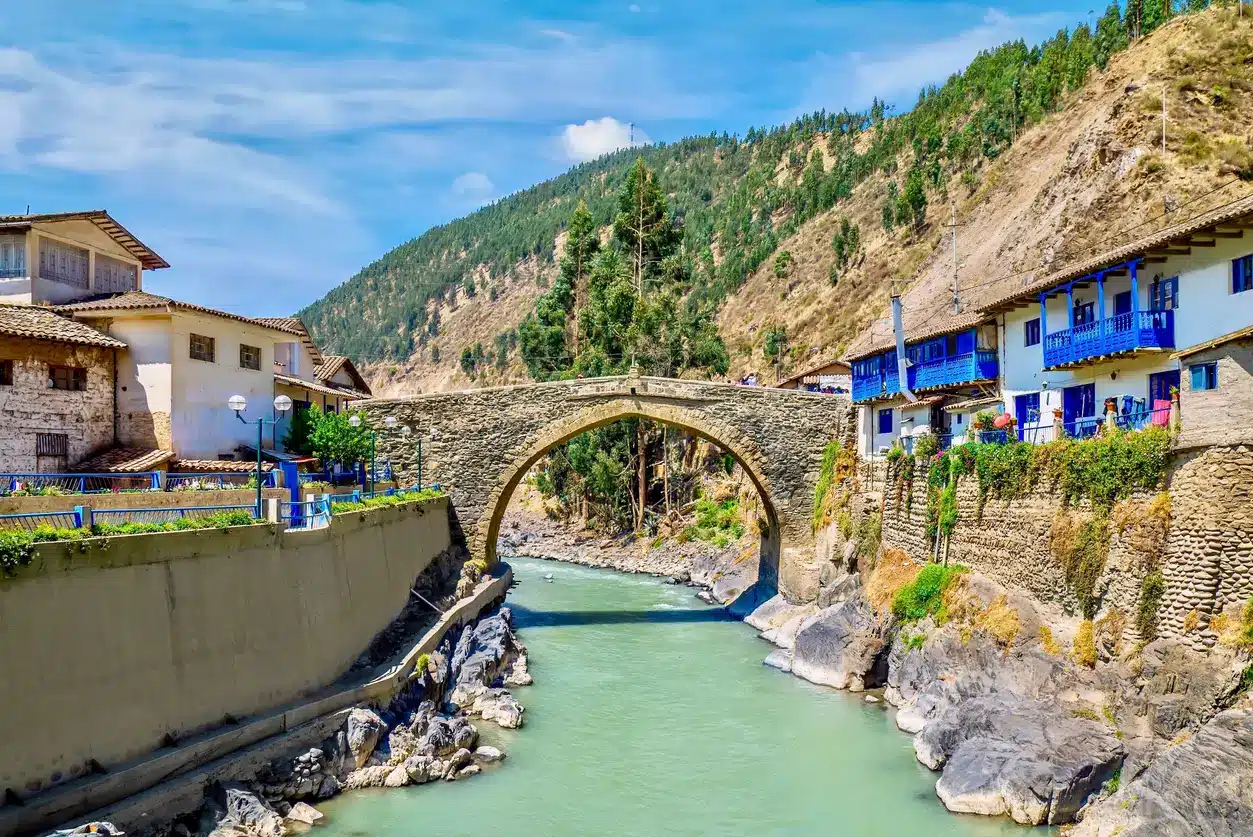
Moving beyond the plaza, the historic streets of the town are equally intriguing. They offer a glimpse into Peru’s rich past. Cobblestone paths and whitewashed buildings with blue balconies are quite picturesque. Exploring here feels like flipping through the pages of a history book, with always something new to catch your eye. You could easily spend the whole afternoon here, soaking in the sights and culture.
Cross the Colonial Bridge of Carlos III
The Colonial Bridge of Carlos III is more than just a passage over the river—it’s a piece of history you can walk on. Built during the Spanish colonial period, the bridge features a distinct architectural style. Crossing it offers scenic views of the surrounding area, especially at sunset.
This bridge connects the town to several rural areas worth visiting, making it a significant landmark in Paucartambo. No trip here is complete without crossing it. Take a moment to admire the intricate details of the bridge. It’s also a popular spot for photos, so don’t forget your camera. You won’t forget the first time you walk across it.
Photograph the Blue Balconies and Colonial Details
Bring your camera when in Paucartambo. The town is famous for its well-preserved blue balconies and colonial architecture. Walking through the streets, you’ll find plenty of charming spots. Each balcony seems to have a story. The buildings have colorful facades with intricate woodwork.
It’s not just about the balconies. Doorways and windows also feature beautiful colonial-style designs. Photographers love capturing these details. Even if photography isn’t your thing, the beauty is undeniable. Every corner of the town has something unique to offer. You’ll find yourself continuously surprised.
Take a Scenic Walk Through Rural Trails
If you love walking, the rural trails around Paucartambo should be on your list. They offer peaceful and scenic routes. You can wander through lush landscapes and open fields. It’s a great way to connect with nature. Plus, it’s a fantastic opportunity to see local wildlife.
Some trails also pass through traditional Andean farming communities, where you can see terraced fields and daily rural life. Trails lead to small villages and other natural attractions. They are usually safe and accessible. It’s a great spot for a relaxing walk or a tougher hike, depending on what you’re up for. Bring a picnic and enjoy the quiet atmosphere — a calm escape from the lively town center.
Explore the Traditional Market
Exploring the traditional market in Paucartambo is an engaging experience for visitors. The market is especially lively in the mornings and is full of local products. The market offers fresh produce and unique handmade items. Its vibrant atmosphere gives you a real feel for daily life in Paucartambo.
Visiting the market is a sensory delight. Sounds, smells, and colors create a lively atmosphere. It’s also the perfect place to try local foods like tamales, corn snacks, and herbal teas and buy souvenirs. The vendors are friendly and often open to sharing stories. A visit here is a chance to understand the culture better.
Listen to Live Traditional Music
Live traditional music adds a beautiful soundtrack to your Paucartambo adventure. You’ll hear local Andean melodies that are both soothing and captivating. During festival times—especially the Virgen del Carmen Festival—music fills the streets with traditional instruments like the quena and charango. Outside festival dates, music can still be heard at local events or gatherings, particularly on weekends.
These performances are a rich expression of culture and tradition. You’ll see locals and tourists enjoying the tunes together. It’s also an opportunity to meet new people. Add this to your itinerary to experience a unique facet of Paucartambo. The music will stay in your heart long after your visit.
Stay in a Family-Run Guesthouse
Staying in a family-run guesthouse offers a more authentic and personal experience. These accommodations provide a welcoming, home-like environment. Hosts often go out of their way to make sure you feel at home. It’s a chance to learn more about the local way of life. Plus, the food is often home-cooked and delicious.
Guesthouses are typically centrally located, with most attractions within easy walking distance. You’ll have the opportunity to get personalized recommendations from your hosts. It’s a cozy and affordable option that adds a genuine touch to your visit to Paucartambo. You’ll leave with new friends and lasting memories.
Use Paucartambo as a Gateway to Manu National Park
Paucartambo serves as a convenient gateway to the incredible Manu National Park. This park is recognized by UNESCO and is a great place for people who love wildlife and nature. From the town, you can organize tours to explore its diverse ecosystems. A trip here offers a chance to see rare flora and fauna, including species found nowhere else in the world.
In addition to wildlife spotting, the park offers breathtaking hikes and scenic river excursions. Guided tours enhance the experience by providing in-depth knowledge about the area. It’s a great way to deepen your appreciation for nature. Don’t miss the chance to explore this unspoiled wilderness—and Paucartambo is one of the best starting points to get there.
Paucartambo really gives you a special chance to explore a part of Peru that many visitors don’t get to see. With its rich traditions, stunning landscapes, and welcoming community, there’s truly something for every kind of traveler. Whether you’re exploring the town’s historical sites, soaking in breathtaking views, or simply enjoying the slower pace of life, your time in Paucartambo will be one you won’t forget.
Now that you know what to see and do, it’s time to start planning the details. From getting there to knowing what to pack, a few local tips can help you make the most of your visit to Paucartambo. Let’s go over what you should keep in mind before heading out below.
Practical Paucartambo Travel Tips to Remember
Traveling to Paucartambo is more than just a stop on the map—it’s an experience filled with culture, nature, and local warmth. But because this isn’t a major tourist town, a little preparation goes a long way. Here are some practical tips to help you enjoy your Paucartambo visit and travel with confidence:
What to Pack: Be Ready for Mountain Weather
Paucartambo sits at nearly 3,000 meters (about 9,800 feet) above sea level. This means the weather can shift fast, and the sun might feel strong even when it’s cooler. Here’s what you’ll want in your bag:
- Warm Layers – Mornings and nights can be cold, especially outside the dry season. Bring a fleece or insulated jacket and cozy sleepwear.
- Sun Protection – High-altitude sun can burn fast. Pack sunscreen, a hat, and sunglasses.
- Rain Gear – Visiting between November and March? A lightweight raincoat or poncho can be really helpful.
- Comfortable Shoes – Cobblestone streets, steep paths, and festival crowds call for sturdy walking shoes or light hiking boots.
Where to Stay: Simple, Local, and Charming
Accommodations in Paucartambo are limited but full of heart. Expect basics, not luxury. That said, the hospitality is genuine and often family-run. You’ll typically find:
- Small hostels with shared amenities
- Family-run guesthouses (hospedajes)
- Homestays during festival season
If you plan to visit during the Virgen del Carmen festival in July, book well in advance—rooms fill up fast, and many travelers return every year.
Staying Healthy and Safe
Paucartambo is welcoming and generally safe, but here are a few things to keep in mind:
- Altitude Adjustment – If you’re coming from lower elevations, give yourself time to acclimate. Drink plenty of water, skip alcohol the first day, and rest if needed.
- Water Safety – Stick with bottled or filtered water. And if you have a sensitive stomach, go easy on raw street food.
- Medical Access – Basic care is available, but for emergencies, Cusco has better facilities. Bring a basic first aid kit with the essentials, just in case.
Be Respectful of Local Traditions
Paucartambo holds tight to its cultural roots, blending Catholic and Quechua beliefs. Visitors are welcome, but respect goes a long way.
- Ask before taking close-up photos, especially during ceremonies or dances. Many rituals have deep spiritual meaning.
- Dress modestly when visiting churches or sacred spaces.
- Learn a few Spanish or Quechua words. Even simple greetings show appreciation.
- Buy local. Supporting artisans and food vendors helps the community directly.
Paucartambo is quiet, grounded, and full of life. It rewards travelers who take their time and stay open to real connections. A little planning will make your visit more comfortable, but it’s the people and the stories you encounter that will stay with you long after you leave.
Where to Go Next After Paucartambo: Itinerary Ideas
Once you’ve explored the charm and culture of Paucartambo, you don’t have to stop there. The region around it offers even more incredible destinations—each with its own story, landscape, and rhythm. Whether you’re heading deeper into the Andes, toward the jungle, or on your way to Peru’s most iconic ruins, here are a few great places to add to your itinerary:
Cusco
Returning to Cusco means stepping back into the vibrant cultural heart of the Andes. You can explore an array of fascinating Inca history and architecture. Maybe you’ll want to visit some museums or simply wander around the charming streets. There are also plenty of local eateries where you can sample traditional Peruvian dishes. If you need to recharge, this is a great place to slow down and plan your next move.
Pisac
Consider stopping by Pisac, a Sacred Valley village known for its stunning mountaintop ruins. The hike is rewarding, offering breathtaking views. The Pisac ruins are located on a steep hill above the town and can be explored through a combination of walking paths and terraces. The town also has a busy artisan market full of bright and colorful handmade crafts. It’s a great spot to pick up unique souvenirs. Moreover, experiencing the local culture here is a must.
Ollantaytambo
This charming town is rich in history with its ancient ruins. It offers a peek into the past with its impressive architecture. Ollantaytambo is where most travelers catch the train to Machu Picchu, since it’s the nearest town to the station that goes to Aguas Calientes. You can also visit the ruins above Ollantaytambo, which are less crowded but equally stunning. Take some time to explore its narrow cobblestone streets. It’s both a historically enriching and picturesque destination.
Machu Picchu
When you’re ready for Machu Picchu, take the train from Ollantaytambo to Aguas Calientes, the town at the base of the mountain, and then continue by bus or hike up to the archaeological site. This journey leads you to one of the most iconic sites in Peru. The lost city of the Incas awaits with its awe-inspiring terraces and stone structures. It’s an experience like no other, steeped in mystery and stunning scenery. Be sure to spend ample time soaking in the majestic views.
Frequently Asked Questions
If you’re curious about visiting Paucartambo, you’re not alone. Since it’s less traveled than places like Cusco or Machu Picchu, it’s normal to have questions before you go. From how to get there to what to expect once you arrive, this FAQ section covers the basics to help you plan with ease and enjoy a smooth, meaningful experience.
When is the best time to visit Paucartambo?
The best time to visit Paucartambo is during the dry season from May to September. This period offers pleasant weather, making it ideal for exploring the region’s natural beauty. If you want to experience the vibrant Virgen del Carmen Festival, plan your visit around mid-July. But be ready for bigger crowds, and try to book your place to stay early since hotels get full quickly during the festival.
Will I experience altitude sickness in Paucartambo?
Paucartambo is situated at around 2,906 meters (9,534 feet) above sea level, which can indeed cause altitude sickness for some visitors. Symptoms may include headache, nausea, and dizziness. It’s advisable to acclimatize for a few days in a lower-altitude area like Cusco (around 3,400 meters or 11,200 feet) before your visit and stay hydrated. It’s also wise to avoid heavy exertion on your first day.
Is Paucartambo safe for tourists?
Paucartambo is generally considered safe for tourists, with a friendly local community and a welcoming atmosphere. Like when visiting any place, it’s important to watch your belongings and stay informed about local tips and advice. While the town is peaceful, always ask locals about areas that might be less safe, especially if you’re hiking or venturing into more remote areas.
Do I need to book accommodations in advance?
It is recommended to book accommodations in advance, especially if you plan to visit during the Virgen del Carmen Festival in July. This festival attracts many visitors, and lodging options can fill up quickly. During the dry season outside of the festival, booking ahead isn’t as essential, but it’s still a good idea to secure your stay, especially for the best choices.
What kind of food can I expect in Paucartambo?
In Paucartambo, you can enjoy traditional Peruvian cuisine, with a focus on local Andean ingredients. Expect dishes like cuy (guinea pig), rocoto relleno (stuffed pepper), and various potato and quinoa-based meals. Street food and local markets often offer a genuine taste of the region’s flavors. The local specialties may also include traditional soups like caldo de cabeza (head soup) and tamales.
Do I need tickets to attend the Virgen del Carmen Festival?
No tickets are required to attend the Virgen del Carmen Festival in Paucartambo. The festival is a public event with vibrant street processions and cultural performances that all are welcome to experience. However, accommodations and certain events may require advance bookings. It’s advisable to check if any specific performances or events within the festival require tickets ahead of time.
What should I wear to the Virgen del Carmen Festival?
If you go to the Virgen del Carmen Festival, it’s best to wear comfy clothes and shoes since you’ll be walking around a lot. Given the region’s climate, dressing in layers is recommended to adjust to changing temperatures. It’s a good idea to wear sun protection like hats and sunscreen. Also, be ready for the chance of rain in mid-July.
What else is there to do in Paucartambo besides the festival?
Beyond the festival, Paucartambo offers picturesque landscapes and cultural sites worth exploring. Visit the colonial-era bridge, Puente Carlos III, or wander through the Museo de las Máscaras to see traditional festival masks. The surrounding Andean highlands provide opportunities for hiking and experiencing rural life.
Is Paucartambo a good destination for families?
Paucartambo can be a charming destination for families, offering cultural richness and a glimpse into traditional Andean life. The town’s welcoming atmosphere and scenic surroundings make it enjoyable for visitors of all ages. Families should plan activities suited to children’s interests and engage in educational opportunities about the area’s heritage. There are also some kid-friendly outdoor activities, such as simple hikes and nature walks.
Is it worth visiting Paucartambo outside of festival time?
Yes, Paucartambo is worth visiting outside of festival time for its tranquil environment and cultural insights. Travelers can explore local landmarks, enjoy scenic hikes, and engage with the warm local community. The town offers a peaceful retreat and a chance to experience authentic Andean lifestyle and traditions.
Is there any nightlife in Paucartambo?
Paucartambo has limited nightlife options, with most evening activities centered around local gatherings and small events. During the Virgen del Carmen Festival, the town comes alive with music and dancing. Generally, nightlife is low-key, and visitors can enjoy leisurely dinners at local eateries. Expect a quiet, laid-back atmosphere in the evenings outside of festival time.
How many days should I spend in Paucartambo?
Spending two to three days in Paucartambo allows sufficient time to experience the main attractions and soak in the local culture. This duration offers flexibility to explore the town and possibly enjoy nearby excursions. If visiting during the Virgen del Carmen Festival, an extra day or two could enhance your festival experience. A longer stay is also recommended if you want to explore the surrounding highlands and rural areas.
Final Thoughts: A Journey to the Heart of Paucartambo
Paucartambo is one of those rare places where tradition, nature, and spirituality come together in a way that feels both grounded and powerful. From the energy of the Virgen del Carmen festival to the quiet wonder of sunrise at Tres Cruces, this small Andean town offers a deeply authentic experience that stays with you long after you’ve left.
If you’re a cultural traveler, a nature lover, or simply someone looking to go beyond the usual tourist path, Paucartambo is a meaningful detour worth taking. It’s not about flashy attractions—it’s about connection, depth, and a slower rhythm that helps you appreciate the authentic Peru.
Make it part of your journey through the Cusco region, especially if you’re also planning to visit Machu Picchu or the Sacred Valley. Consider timing your visit in July for the festival, or plan a longer stay to explore the remote edges of Manu National Park.
To make your adventure even smoother, consider starting your trip with Inca Rail. Our comfortable, scenic train rides connect you to the heart of Peru, making it easier to experience places with ease and inspiration. Let your journey begin with us—and discover a side of Peru that few travelers ever get to see.


