
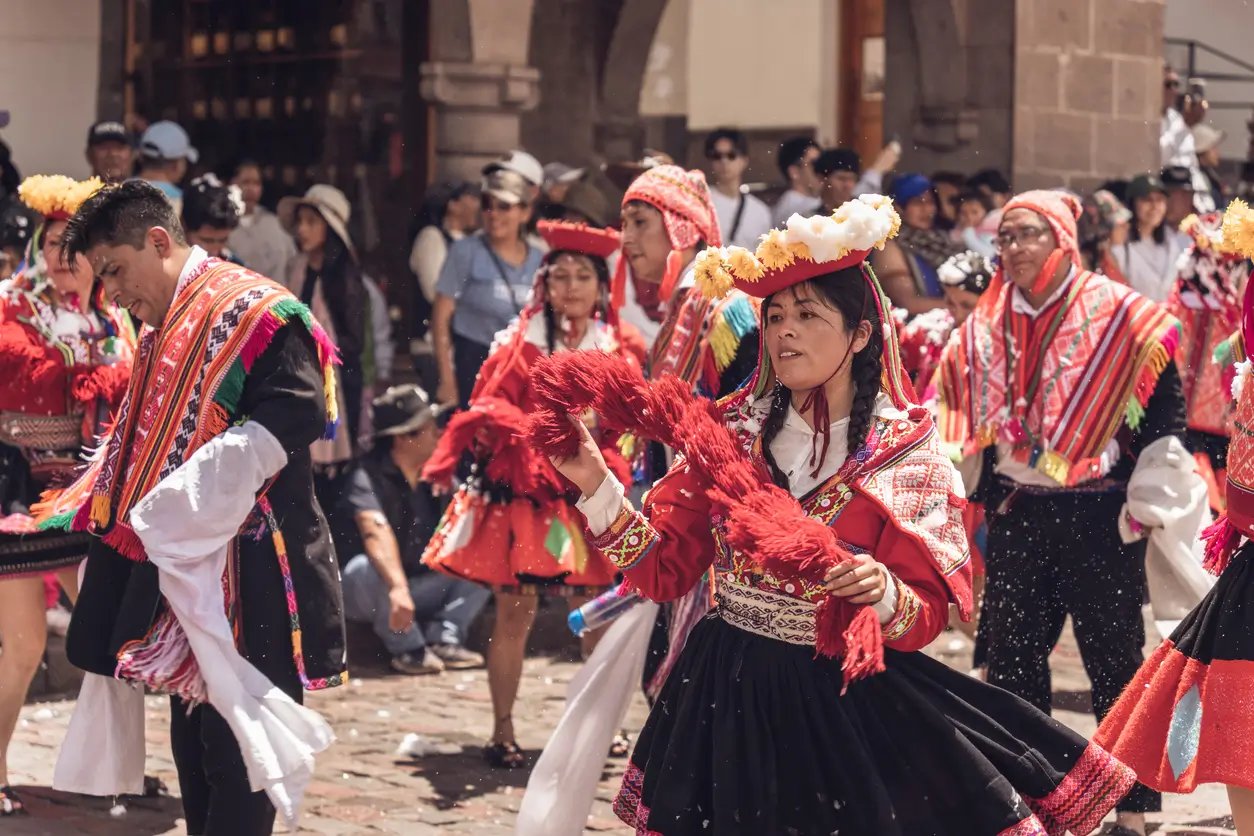
Incas Dance: The History, Meaning, and Culture Behind This Ancient Tradition
Dance was an important part of ceremonies, festivals, and community life in the Inca world. People danced during religious rituals, seasonal celebrations, and other public gatherings, often accompanied by drums, flutes, and other Andean instruments. These occasions brought people together and gave dance an important place in Inca society. For those interested in Peru’s history and culture, Incas dance offers a way to explore the traditions and beliefs of the Andes.
Because the Inca Empire covered a large part of the Andes, there was no single style of dance shared by every community. Different communities had their own dances, music, clothing, and customs, while the meaning of a performance could depend on the occasion. Dance could be connected with religious ceremonies, seasonal and agricultural cycles, festivals, and community life. As a result, the term “Incas dance” refers to a variety of dance traditions associated with the Inca world rather than one specific dance.
Over the centuries, Andean dance traditions continued to develop and change. After the Spanish conquest, European customs and Roman Catholic practices became part of many local celebrations, often alongside older Andean traditions. Today, dances performed across Peru reflect this layered history, with regional styles, music, costumes, and movements that represent the diverse communities and cultural traditions of the country.
What will you find here?
- The History of Incas Dance: From Ancient Andean Traditions to the Inca Empire
- What Did Incas Dance Mean?
- Different Types of Incas Dance and Performances
- Music and Instruments Used in Incas Dance
- Clothing and Costumes in Incas Dance
- Incas Dance vs. Traditional Dances of Cusco
- Dance in Peru Today: How Incas Dance and Andean Traditions Live On
- Frequently Asked Questions
- Final Thoughts
The History of Incas Dance: From Ancient Andean Traditions to the Inca Empire
The history of Incas dance goes back further than the Inca Empire itself. Music, dance, and communal ceremonies were already part of life in the Andes long before the Inca state emerged. When the Inca state expanded, the Incas became part of this much older cultural landscape, incorporating existing musical and ceremonial traditions into their own religious ceremonies, festivals, and public gatherings.
The Origins of Incas Dance in the Andes
Dance did not begin with the Incas. Earlier Andean societies had their own musical and ceremonial traditions, with archaeological evidence showing that instruments were used in the region thousands of years before the Inca period. These traditions included different types of flutes, panpipes, drums, and other instruments used in ceremonial and social settings.
The Incas inherited this long history when their state expanded from Cusco. They ruled over many communities with their own customs, languages, and traditions, so dance traditions varied across the empire rather than following one single style. This diversity is important when discussing Incas dance: there was no single dance that represented everyone living under Inca rule.
Dance During the Inca Empire
During the Inca period, dance was part of ceremonial, social, and public life. Sixteenth-century Spanish chroniclers described singing and dancing at Inca festivals, while the Indigenous Andean chronicler Felipe Guamán Poma de Ayala, writing in the early seventeenth century, also recorded dances, songs, and musical instruments associated with different parts of the Inca realm.
Music accompanied many of these performances. Sources mention instruments such as flutes, panpipes, trumpets, drums, and rattles. Different instruments and musical practices were associated with particular communities and occasions, reflecting the cultural diversity of the Inca Empire. Some traditions were connected with local communities, while others were used in celebrations organized or supported by the Inca state.
The Role of Dance in Inca Ceremonies and Celebrations
Dance could form part of religious ceremonies and large public celebrations. These events often brought together music, singing, food, drink, and dancing, creating occasions where communities gathered for religious, social, and political purposes.
Some dances had specific religious meanings. One example recorded in early colonial sources is the taqui yanayra, a ritual performed in Cusco by men and women who held a long, four-colored rope. Colonial descriptions connect the ritual with ancestral traditions and ideas about the transmission of life force.
Dance was also part of celebrations outside the Inca capital. Historical records describe the cachua (also spelled qachwa), a communal or social dance associated with celebration, singing, and courtship. Its presence in historical sources shows that dancing was not limited to formal religious ceremonies or events in Cusco, but was also part of broader Andean social life.
What Did Incas Dance Mean?
Incas dance did not have one fixed meaning across the Inca Empire. Its meaning depended on the type of dance, the community performing it, and the occasion. Some performances were part of religious rituals, while others brought people together for festivals, celebrations, and community events. Dance was usually performed with music, making it part of a larger ceremonial or social activity.
Religious and Spiritual Meaning
Some dances were performed during religious ceremonies. They could accompany rituals honoring sacred beings, ancestors, sacred places, or important events in the religious calendar. Music and dance could also be part of larger ceremonies that included offerings, processions, feasting, and communal gatherings.
Inca religious life was closely connected with huacas, a broad term for sacred beings, places, and objects. Some natural features, such as mountains, springs, and rocks, could have sacred significance. Ceremonies involving huacas helped maintain relationships between people, their communities, and the sacred world.
Connection to Ancestors and Nature
Ancestors had an important place in Inca religious life. Venerated ancestors, including former rulers, continued to have religious and political importance after death. Ceremonies helped maintain relationships between the living and their ancestors, and some documented performances were connected with these beliefs.
One example is the taqui yanayra, a ritual described in early colonial sources. It was performed in Cusco by men and women who held a long, four-colored rope representing a serpent. The ritual was associated with ancestors and the transmission of life force to living people.
Nature was also closely tied to Inca beliefs. Mountains, springs, rocks, and other parts of the landscape could be considered sacred or associated with huacas. Agricultural life depended on rainfall, fertile land, and seasonal changes, so ceremonies could reflect the relationship between communities, sacred places, agriculture, and the natural world.
Community and Social Meaning
Dance brought people together during festivals and public gatherings. These occasions could include singing, music, dancing, food, and drink, giving communities time to celebrate and take part in shared traditions. Feasting and drinking also had important social and ritual roles, helping strengthen relationships within communities and with the wider sacred world.
Since the Inca Empire included many different communities, dances also varied from one place to another. Local traditions remained part of community life, so there was no single meaning or purpose shared by every dance across the empire.
Different Types of Incas Dance and Performances
Inca-era dance took many forms and was part of religious ceremonies, festivals, public celebrations, and community life. Historical accounts describe performances involving singing, musical instruments, masks, group formations, and different types of movement. Because the Inca Empire included many different communities and regions, these performances did not follow one single style or have one common purpose.
Some dances were associated with the Inca court or particular festivals, while others reflected traditions practiced by communities across the empire.
Taqui
Taqui was a dance and song performance that combined singing, movement, and music. It was performed during Inca ceremonies, festivals, and public gatherings, with groups of people dancing and singing together.
Different taquis served different purposes. Some were connected with religious ceremonies, while others were performed during celebrations and community gatherings. Musical instruments accompanied the performances, creating a combination of dance, singing, and instrumental music.
Cachua
Cachua was a communal dance performed by men and women. Historical descriptions portray groups of dancers joining hands and moving together, including in circular formations.
The dance was associated with festivals, celebrations, and social gatherings. Its group movements brought many participants together and made it an important part of communal festivities in the Andes.
Guayaya
Guayaya, also called Guayara, was a dance associated with the Inca royal court. Men and women participated while holding hands and forming long lines. The dancers could form separate lines of men and women or mixed groups.
Historical descriptions state that the dance was accompanied by a large drum carried on the back and played by a woman. The dancers followed a measured three-step rhythm: one step backward followed by two steps forward. Large groups could participate, and the dancers moved toward the Inca, who could also join the performance.
Llamallama
Llamallama was a masked and disguised performance associated with the Itu festival during the Inca period. Early colonial accounts mention Llamallama among the performances presented during the celebration, along with Guacón.
Performers wore masks and disguises and took part in dancing and entertaining performances. Historical accounts associate Llamallama with Qullasuyu, the southeastern region of the Inca Empire, and with performers from communities in that area.
Music and Instruments Used in Incas Dance
Music was an important part of Incas dance. Historical accounts describe dancers performing with singing and instruments such as drums, flutes, panpipes, shell trumpets, and rattles. These instruments helped create the rhythm and sound of performances during ceremonies, festivals, processions, and community gatherings.
Drums
Drums played an important role in Inca music and dance. They provided the rhythm that helped groups of dancers move together. Historical accounts describe drums being used during ceremonies, festivals, processions, and other performances.
The tinya was a small drum used in Andean musical traditions. Larger drums were also used for public and ceremonial performances. Drums could be played alongside singing and other instruments, creating the rhythmic foundation for group performances.
Quena
The quena is an end-blown flute associated with traditional Andean music. Flutes were used in the Andes long before the Inca Empire and continued to be part of musical traditions during the Inca period.
Quenas were commonly made from materials such as cane or bone. Their sound could be combined with drums, panpipes, and other instruments during musical performances and ceremonies.
Panpipes
Panpipes were important wind instruments in ancient Andean music. One type of panpipe was the antara, which was made from several tubes of different lengths. Players produced different notes by blowing across the openings of the tubes.
Panpipes were used in the Andes long before the Inca Empire and continued to be played during the Inca period. They formed part of the musical traditions that accompanied ceremonies, celebrations, and other group performances.
Pututu
The pututu was a trumpet made from a large seashell. Its strong sound could carry over long distances, making it useful during ceremonies, processions, and other public occasions.
The pututu was not used only for dance. It was also used to announce important events and accompany public and religious activities. Historical sources identify shell trumpets among the instruments used in Inca music.
Bells and Rattles
Rattles were percussion instruments used to add rhythm and sound to performances. Historical sources describe rattles among the instruments used in Inca music and ceremonies.
Rattles could be made from different materials and used alongside drums and other instruments. Their sounds added another rhythmic element to musical performances and celebrations.
Music was an essential part of Incas dance, bringing rhythm, movement, and sound together during ceremonies, festivals, and community gatherings. Drums helped set the rhythm, while flutes, panpipes, shell trumpets, and rattles added different sounds to the performances. Singing also played an important role, with dancers and singers often performing together.
Clothing and Costumes in Incas Dance
Clothing was an important part of Inca ceremonial and public life, including dance performances. Dancers wore garments, headdresses, ornaments, and other accessories that could identify their community, social position, or role in a ceremony. Costumes also helped make different groups of dancers recognizable during large public celebrations.
Tunics and Textiles
Men commonly wore a unku, a woven tunic that usually reached to the knees or around the knees. Women wore a long wrapped dress known as an anaku, which was secured with a belt and worn with a mantle over the shoulders.
Fine textiles were highly valued in Inca society. The quality, materials, colors, and decoration of clothing could reflect a person’s social position.
Headdresses
Headdresses were an important part of Inca ceremonial dress. Dancers could wear woven headbands, feathers, wool ornaments, or other decorations depending on the occasion and the group they represented.
Some ceremonial headwear was elaborate and could indicate social status, community identity, or participation in an important ceremony.
Feathers and Ornaments
Feathers, beads, shells, metal ornaments, and other decorations could be used to add color and detail to ceremonial clothing and accessories. Gold and silver objects were especially associated with wealth, status, and important religious or political settings.
Ornaments could also communicate information about a person’s status, community, or role. Their use depended on the person, occasion, and type of ceremony.
Masks
Masks were used in some Inca-period performances and ceremonies. They could change the appearance of the performer and help create a particular character or identity during a performance.
Historical accounts describe masked performances during Inca celebrations, showing that masks could form part of theatrical and ceremonial dress.
Clothing and costumes were an important part of Incas dance. Dancers wore woven garments, headdresses, ornaments, and other accessories that reflected the clothing traditions of Inca society. Different groups and occasions could have different styles of dress, helping distinguish performers during ceremonies, festivals, and public gatherings.
These costumes also show the importance of textiles and skilled craftsmanship in Inca culture. Clothing was closely connected with social status, community identity, and ceremonial life, making it an important part of the overall dance performance.
Incas Dance vs. Traditional Dances of Cusco
Inca dance and traditional dances of Cusco are related, but they are not the same. Incas dance refers to dance traditions and performances documented in connection with the Inca world, while traditional dances of Cusco are living traditions performed in the region today. Some Cusco dances have Andean or Inca-era influences, but this does not automatically mean they were performed by the Incas.
History
Dance had a place in Inca ceremonies, festivals, and public celebrations. Performances could include groups of dancers, singing, musical instruments, and ceremonial clothing and ornaments. Different dances were connected with different occasions and groups within Inca society.
After the Spanish conquest, Andean communities continued practicing and adapting their cultural traditions while responding to new religious and social conditions. Over time, dance became part of Catholic festivals and other local celebrations in Cusco. Indigenous traditions and Catholic practices influenced each other, helping shape many of the dances performed in the region today.
Differences
The main difference is their historical context.
Incas dance refers to historical dance and performance traditions associated with the Inca Empire. These traditions were connected with the religious, social, agricultural, and ceremonial life of the Inca period.
Traditional dances of Cusco are living traditions that developed over later generations. They are performed during festivals, religious celebrations, and community events. Their stories and characters can represent Andean communities, local history, occupations, religious beliefs, and encounters between Indigenous peoples and Spanish colonial society.
Cultural Connections
The connection between Inca and Cusco dance can be seen in the continued use of group movement, traditional Andean instruments, distinctive clothing, masks, singing, and storytelling. Community participation also remains an important part of many Cusco festivals.
Some dances preserve ideas and symbols associated with the Andes before the Spanish conquest, while others reflect changes that took place during the colonial and later periods. The result is a dance culture in which older Andean traditions and later influences exist together.
For visitors learning about Cusco, the distinction is simple: Inca dance belongs to the history of the Inca period, while traditional Cusco dance represents living traditions that have developed in the region over many generations.
Dance in Peru Today: How Incas Dance and Andean Traditions Live On
Dance remains an important part of cultural life in Peru today. Communities across the country perform dances during religious festivals, community celebrations, regional events, and other special occasions. Each region has its own music, clothing, movements, and traditions, reflecting the diverse history of Peru.
Some modern Peruvian dances preserve elements of older Andean traditions, including group dancing, traditional instruments, distinctive clothing, and community participation. Other dances developed through changes that took place after the Spanish conquest and include influences from Indigenous, Spanish, African, and other cultural traditions.
From Inca Times to Today
Incas dance belongs to the historical period of the Inca Empire, while modern Peruvian dances are living traditions that have developed over many generations. Some modern dances preserve elements of older Andean culture, including traditional instruments, clothing, group performances, and community participation.
After the Spanish conquest, Andean communities continued their traditions while incorporating new religious and cultural influences. This helped shape the dances performed in Peru today, especially those connected with local and Catholic festivals.
Dance in Cusco Today
Cusco has a particularly strong connection to Inca history because it was the center of the Inca Empire. Traditional dances are still performed throughout the region during festivals and community celebrations.
These modern dances should not automatically be described as ancient Inca dances. Some contain older Andean elements, while others developed during the colonial period or later.
The Continuing Legacy
Incas dance is part of the long history of dance in the Andes. Modern Peruvian dances show how music, movement, clothing, and community traditions have continued to develop over time. Together, they help illustrate the lasting cultural importance of dance in Peru.
Frequently Asked Questions
In this section, you’ll find answers to common questions about Incas dance and learn more about its history, traditions, and cultural importance.
Did men and women dance together in Inca society?
Yes, some Inca dances included both men and women. Historical accounts describe performances in which men and women danced together, including the taqui yanayra and other group dances. The way people danced together depended on the type of Incas dance and the occasion.
How was folkloric music connected to Incas dance?
Music and dance were closely connected in Inca celebrations and festivals. Singing, drums, flutes, panpipes, shell trumpets, and rattles could accompany dances and other performances. These traditions became part of the wider musical traditions of the Andes that later influenced Peruvian folkloric music.
How does Incas dance form part of Peru’s musical heritage?
Incas dance is part of Peru’s wider history of music, dance, and ceremony. Inca musicians used instruments that had long histories in the Andes, including flutes, panpipes, drums, and shell trumpets. These older traditions help explain the deep musical heritage found in Peru today.
How was Incas dance connected to other Incan traditions?
Incas dance was often performed as part of larger ceremonies, festivals, and religious events. These occasions could include music, singing, clothing, food, and other community activities. Dance therefore formed part of the wider Incan traditions that brought people together for important events.
How is Incas dance connected to the Inti Raymi Festival?
The Inti Raymi Festival is based on an important Inca celebration honoring Inti, the Sun. Dance was part of the ceremonies and public celebrations associated with the Inca festival, and the modern Inti Raymi in Cusco includes dance, music, costumes, and processions as part of its presentation. The festival held today was recreated in the twentieth century, so its dances represent a modern interpretation of Inca traditions.
What role did Inca musicians play in Incas dance?
Inca musicians provided the music that accompanied dance and other ceremonies. Historical accounts describe musicians using instruments such as drums, flutes, panpipes, trumpets, and rattles. Their music helped create the rhythm and sound that went with Incas dance performances.
How was Incas dance connected to other Incan traditions?
Incas dance was closely connected with music, singing, religious ceremonies, festivals, and community celebrations. Dancers often performed as part of larger events where people also gathered for rituals, shared meals, and other activities. This made dance an important part of Incan traditions and ceremonial life.
Final Thoughts
Incas dance offers a glimpse into how people in the Inca world celebrated important moments, took part in ceremonies, and came together as communities. Dance was closely tied to music, singing, clothing, and the events around it, with different performances serving different purposes.
The variety of these performances also reflects the size and diversity of the Inca Empire. Communities across the Andes had their own customs, while some traditions became part of larger Inca ceremonies and celebrations. Historical records and archaeological evidence help us piece together what these performances were like and how they fit into Inca society.
The story does not end with the fall of the Inca Empire. Andean communities continued their cultural practices through centuries of change, and dance remains an important part of life in Peru today. Looking at Incas dance alongside modern Andean traditions gives us a better understanding of the cultural history that connects the past with Peru today.
If you like to learn more about the Inca civilization beyond its traditional dances, a visit to Machu Picchu is a great place to continue exploring. The journey through the Sacred Valley offers a chance to take in the Andean scenery before reaching one of the most remarkable legacies of the Inca civilization. With Inca Rail’s train journeys, you can make the trip part of your experience while discovering more of the landscapes and history that continue to shape Peru’s cultural identity.
Explore Inca Rail’s train options to Machu Picchu and start planning your journey through the heart of the Andes.


